If you are reading this, there is a good chance you are a parent who does “everything right.” You have replaced the gummy worms with organic raisins. You have swapped the fruit punch for 100% apple juice. You spend time reading ingredient labels, avoiding high-fructose corn syrup, and ensuring your pantry is stocked with granola bars and whole-grain crackers instead of traditional “junk food.”
Yet, at your last visit to the pediatric dentist in Stafford, VA you heard the one word you worked so hard to avoid: cavity.
It is a moment filled with quiet frustration. When you have spent months or years being the “gatekeeper” of your child’s diet, a decay diagnosis can feel like a personal failure. We want to stop you right there. It is not a failure of effort; it is a gap in information. The reality is that the modern “healthy” snack rotation is often just as cariogenic meaning it contributes to tooth decay as the candy you worked so hard to eliminate.
At Junior Smiles of Stafford, we believe that understanding the mechanism of decay is more powerful than just following a list of “good” and “bad” foods. Once you see how the mouth reacts to certain textures and frequencies, the path to a cavity-free checkup becomes much clearer.

You’re Not Doing It Wrong (Here’s What’s Actually Happening)
The frustration health-conscious parents feel often stems from the “Health Halo” effect. This is a psychological phenomenon where we perceive a food as being “safe” for the entire body because it contains vitamins, fiber, or no added sugar. While a box of raisins is certainly better for your child’s digestive system than a lollipop, the dental chemistry in the mouth doesn’t always see the difference.
To the bacteria in your child’s mouth, sugar is sugar, whether it comes from an organic apricot or a bag of processed sweets. When you provide specialized pediatric dental care, the focus shifts from the nutritional value of the food to its physical interaction with the enamel. Some of the most nutritious foods in a child’s diet are also the ones that trigger the most prolonged “acid attacks.”
How Cavities Actually Form: The Stephan Curve
To understand why “healthy” snacks are problematic, we have to look at the Stephan Curve. This is a graph that dental professionals use to illustrate the rise and fall of oral pH levels after eating.
- The Neutral Zone: A healthy mouth is at a neutral pH of about 7.0.
- The Drop: When your child eats “fermentable carbohydrates” which include sugars and cooked starches the bacteria in their mouth (specifically Streptococcus mutans) metabolize that food and produce acid as a byproduct.
- The Acid Attack: Within minutes, the pH level drops. Once it falls below the “critical pH” of 5.5, the enamel begins to demineralize. This is the “acid attack window.”
- The Recovery: It takes the body’s natural saliva roughly 20 to 30 minutes to neutralize that acid and bring the pH back to 7.0, allowing for remineralization.
The American Dental Association (ADA) notes that this 20-to-30-minute window is the most critical time for tooth decay. If your child is constantly eating throughout the day, their mouth never leaves this acid window.
The ‘Healthy’ Foods That Are Still Causing Cavities
Let’s look at the specific “blind spots” in the typical health-conscious pantry and why they are so effective at causing decay.
Dried Fruit (Raisins, Dried Mango, Apricots)
Dried fruit is perhaps the most common “healthy swap” that carries the same dental risk as gummy candy. When fruit is dried, the water is removed, concentrating the natural sugars into a small, dense package. More importantly, the texture becomes extremely “retentive.” These sticky fragments lodge deep into the pits and fissures of the molars. While a fresh grape is rinsed away quickly by saliva, a raisin can remain stuck in a molar groove for hours, fueling a continuous acid attack.
100% Fruit Juice
Even with “no added sugar,” fruit juice is naturally high in fructose and highly acidic. Apple juice, orange juice, and grape juice often have a pH level as low as 3.0 to 4.0. When a child sips juice throughout the day, they are effectively “bathing” their teeth in acid. The “natural” label does not change the dental chemistry; the enamel is softened just as much by juice as it is by soda.

Granola Bars and Chewy Granola
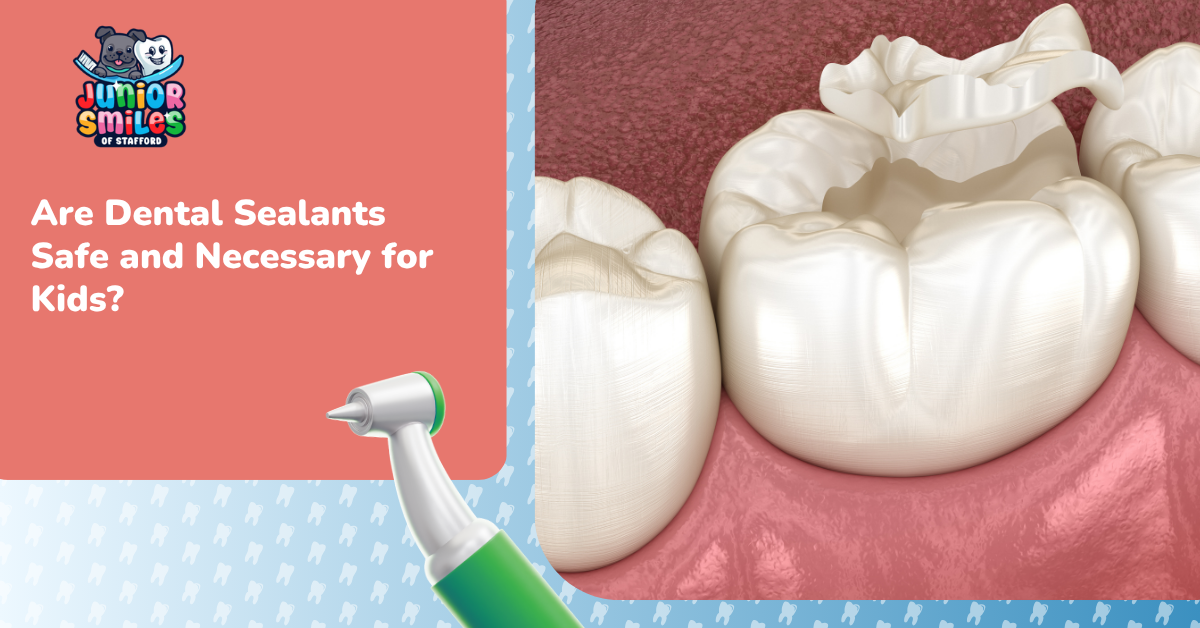
Many granola bars are held together by “natural” binders like honey, maple syrup, or brown rice syrup. While these are less processed than corn syrup, they are still fermentable carbohydrates. Additionally, the oat-based fragments are mechanically difficult to clear. They pack into the grooves of the teeth where toothbrushes often struggle to reach. This is a primary reason why we recommend [dental sealants](https://juniorsmilesofstafford.com/) for back teeth to create a physical barrier against these retentive food particles.

Crackers and Starchy Snacks
Parents are often shocked to learn that goldfish crackers or whole-wheat pretzels can be worse for teeth than chocolate. This is due to salivary amylase, an enzyme in saliva that begins breaking down complex starches into simple sugars while the food is still in the mouth. These starches become a paste that sticks to the teeth, providing a long-term food source for bacteria.

Citrus Fruit and Citrus-Based Drinks
While citrus is a great source of Vitamin C, it presents an enamel erosion risk. Lemon water, daily orange juice, or snacking on oranges weakens the enamel. This is a “compounder” effect; the acid doesn’t cause the cavity directly, but it thins the enamel so that the bacteria can penetrate the tooth much more easily.

But It’s Not Just What They Eat. It’s How Often.
The biggest secret in pediatric dentistry isn’t about sugar quantity; it’s about frequency.
Imagine two scenarios:
- Scenario A: A child eats one large chocolate bar in five minutes and then rinses with water.
- Scenario B: A child grazes on a box of “healthy” organic raisins over the course of two hours.
From a dental perspective, Scenario B is much more dangerous. In Scenario A, the mouth experiences one 30-minute acid attack. In Scenario B, the mouth is under a near-continuous acid attack for two and a half hours. The pH level never has a chance to return to neutral.
If your child snacks 3 to 4 times a day on items from our “blind spot” list, that can equal nearly 2 hours of daily acid exposure before the first toothbrushing session even begins. This is why we often suggest topical fluoride applicationsto help strengthen the enamel against this cumulative exposure.
Read more: Is Fluoride Toothpaste Safe for Kids?
Check Your Child’s Snack Routine (A Quick Self-Audit)
To move from confusion to clarity, take a moment to look at your child’s routine over the past six months. Check off any that apply:
- Does your child eat dried fruit (raisins, fruit leather, dried mango) 3 or more times per week?
- Is fruit juice (even 100% juice) given with most meals?
- Do granola bars serve as a regular afternoon or pre-practice snack?
- Are crackers (goldfish, pretzels, whole wheat) the go-to school snack?
- Does your child drink lemon water or eat citrus fruits daily?
- Does your child “slow-sip” any beverage other than plain water throughout the day?
- Does your child graze on snacks between meals rather than eating them all at once?
The Result: If you checked two or more of these boxes, these habits are likely the primary contributing factors to your child’s cavities. Again, this is not a failure of effort. It is simply a sign that the “Healthy Halo” has hidden the dental risks of these foods. Understanding this allows you to make small, high-impact changes like serving these items only during mealtime when saliva flow is highest to protect their smile.
What to Take Away From This
If you have been struggling with a “why” despite your best efforts, we hope this provides the clarity you need. Cavities are a biochemical process, not a moral judgment on your parenting.
Enamel acid exposure is cumulative. By adjusting the timing of certain snacks and being aware of retentive textures, you can make a meaningful difference without having to completely overhaul your child’s nutrition. You have already done the hard work of cutting out the obvious junk; now, it is just about refining the “healthy” routine to be as safe for the teeth as it is for the body.
If you have realized that your child might be at higher risk due to these routines, it may be time to consider seeing a pediatric dentist or if a supplemental preventive plan is needed.
Read more: When Children Should Begin Dental Care

For our local neighbors, we know that balancing family health with the realities of Northern Virginia life including the schedules of our many Quantico and military families is a challenge. We are here to help you navigate those logistics while providing affordable care that fits your family’s budget and values.
You’ve got the effort; now you have the information. Together, we can ensure those “healthy” choices lead to healthy smiles.