If you are a parent who carefully reads labels, limits added sugars, and chooses 100% organic fruit juice over soda, hearing the word “cavity” at a dental checkup can feel like a personal failure. You have done the hard work of building a thoughtful routine, yet you might notice chalky white spots on your toddler’s upper front teeth.
At Junior Smiles of Stafford, we often meet parents in this exact position. You aren’t doing anything “wrong” in fact, your dedication to your child’s health is exactly what makes you a great parent. However, there is a significant gap in the information most parents are given: the vessel your child uses to drink and the frequency of those sips are often more important than the liquid itself.
As a leading pediatric dentist in Stafford, VA, we want to help you understand the relationship between toddler cups and dental health. A simple diagnosis doesn’t have to be a source of stress, especially when you understand the modern sedation and comfort options available to make treatment a positive experience.

Not All Toddler Cups Work the Same Way on Teeth
When we talk about “sippy cup decay,” many articles lump every drinking vessel into one category. In reality, a traditional sippy cup, a straw bottle, and a juice box create very different liquid contact patterns with your toddler’s teeth.
Traditional Sippy Cups
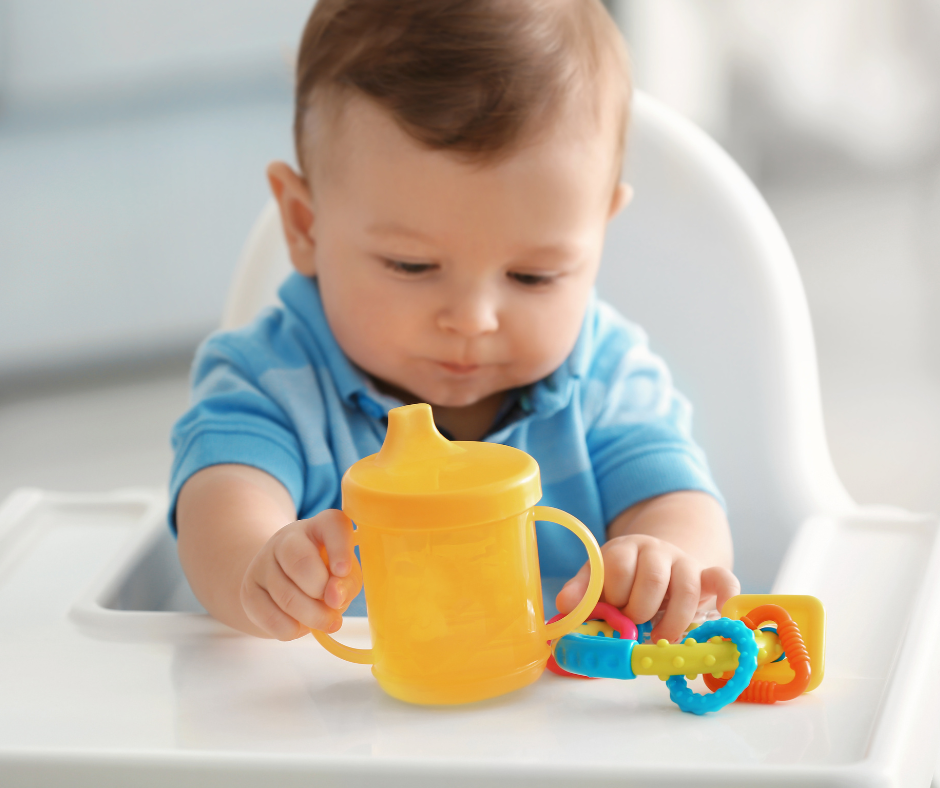
The standard spill-proof sippy cup uses a one-way valve that requires active sucking to release liquid. This mechanism often positions the hard spout directly against the tongue-side or face-side of the upper front teeth. As the toddler sucks, the liquid (even if it’s just milk) pools specifically around the upper maxillary incisors. Because the liquid is delivered slowly and continuously, these teeth are essentially “bathed” in a sugar source for as long as the child carries the cup. For toddlers with sensory sensitivities who may rely on a specific cup for comfort, special needs dentistry experts recommend finding a balance between comfort and oral health.
Straw Bottles
Straw bottles are frequently marketed as the “dentist-recommended” alternative. Physics supports this to an extent: straw delivery sends liquid further back into the mouth, effectively bypassing the front teeth. However, a straw cup is not a “get out of jail free” card. If a toddler carries a straw bottle for two to three hours, they are still creating repeated acid exposure across the molars and premolars. The risk shifts from the front of the mouth to the back, but the underlying mechanism of decay remains the same.

Juice Boxes
Juice boxes are designed for single-serving consumption, but they are often repurposed by busy parents as a slow-sip portable option. This is a double threat: 100% fruit juice is both sugary (fructose) and highly acidic. The small opening of a juice box straw encourages slow, extended drinking. Every time your child takes a tiny sip, they deliver a fresh sugar source to oral bacteria and direct acid to the enamel simultaneously.

How Toddler Cups Actually Cause Cavities
To understand why these cups are problematic, we have to look at the “Stephan Curve” the clinical timeline of what happens in the mouth after a single sip.
When your toddler takes a sip of milk or juice, oral bacteria (specifically Streptococcus mutans) metabolize the sugars to produce acid. This causes the oral pH to drop almost immediately. It takes approximately 20 to 30 minutes for saliva to neutralize that acid and begin the process of remineralizing the enamel.
If your toddler takes a sip every 10 minutes while playing, their mouth stays in a constant state of “acid attack.” The pH never has a chance to recover. This daytime mechanism is distinct from “bottle rot” (early childhood caries), which is caused by liquid pooling overnight while salivary flow is low. Constant daytime sipping is a hidden risk because it happens while the child is active and supervised, making it feel harmless.
The American Academy of Pediatric Dentistry (AAPD) recommends transitioning children away from sippy cups to an open cup or a training cup by 12 to 18 months of age to minimize this window of exposure.
The Real Risk Factor: How Long and How Often
In pediatric dentistry, frequency and duration outweigh total volume.
Consider these two scenarios:
- Scenario A: A toddler drinks 6 ounces of apple juice with their lunch in 10 minutes.
- Scenario B: A toddler sips the same 6 ounces of apple juice from a sippy cup over the course of three hours while playing.
In Scenario A, the child’s teeth face one 30-minute acid cycle. In Scenario B, the child’s teeth are under near-continuous acid exposure for the entire three hours. If your toddler’s cup is always within reach and contains anything other than plain water, that specific pattern is the most likely driver of early enamel damage.

The Early Warning Sign Most Parents Miss
Most parents wait to call the dentist until they see a dark spot or their child complains of pain. However, sippy-cup-related decay has a very specific early warning sign: Chalky white spots near the gum line on the upper front teeth.
These are known as “white spot lesions,” and they represent active enamel demineralization. At this stage, the tooth surface is still intact, but it has become porous and weak. This is the “incipient” stage of a cavity. Catching the problem here is vital because it often allows for non-invasive treatments rather than fillings or crowns.
If you notice these spots, it is time to schedule comprehensive dental exams. Your dentist may recommend a Guide to Fluoride or professional applications to help strengthen those porous areas and stop the decay from progressing.
Read more: Is Fluoride Important for Kids’ Dental Health
Check Your Toddler’s Drink Routine (A Quick Self-Audit)
If you aren’t sure if your toddler’s routine puts them at risk, use this checklist to audit their daily habits. This is a common knowledge gap, not a parenting verdict.
- Does your toddler carry a sippy cup or straw bottle for most of the waking day?
- Does the cup contain juice, milk, or flavored water between meals?
- Is a juice box used as a “portable” drink over an hour rather than finished at a meal?
- Does your child fall asleep with a cup containing anything other than plain water?
- Do you “top off” the cup with juice or milk more than once between scheduled mealtimes?
- Can you see any chalky, opaque white lines or spots near the gum line of the front teeth?
The Result: If you checked two or more items, your child’s drinking pattern is likely contributing to early enamel damage. For families newly relocated to the area, including our local military neighbors navigating TRICARE dental benefits for children, establishing a “dental home” early is the best way to prevent these patterns from becoming permanent damage.
Read more: Does Dental Insurance Cover Pediatric Dentistry
What to Take Away From This
The core reframe is this: Changing the liquid and the pattern matters more than switching the vessel. You don’t necessarily need to throw away every sippy cup today. Instead, begin by filling those cups only with plain water between meals. Save the milk and juice for mealtimes, when they can be consumed quickly and followed by a “rinse” of water.
If your child already has deep grooves in their molars that make them susceptible to liquid pooling, your dentist might eventually discuss dental sealants as part of a long-term strategy. But for today, the most powerful tool you have is awareness.
Read more: 3 Benefits of Dental Sealants for Kids
If you have spotted white spots or are concerned about your toddler’s transition to an open cup, the next step is a gentle, informative conversation with a professional. Our New Patient Welcome Experience is designed to provide you with personalized preventive care plans that respect your family’s routine while protecting your child’s fearless smile.