A child who feels worried about the dentist is not being difficult. New sounds, unfamiliar sensations, or a previous uncomfortable experience can make a dental visit feel overwhelming. Our job is to understand what is causing the worry and build a visit around your child’s needs.
Sedation is one tool we may discuss when anxiety, a strong gag reflex, a young age, special healthcare needs, or the amount of treatment makes it hard for a child to receive care comfortably. It is not a one-size-fits-all solution, and it is never chosen simply to make a child sit still. We first look for the least intensive approach that can provide a safe, successful visit.

What does dental sedation mean for a child?
Dental sedation uses medication and carefully planned behavior guidance to help a child relax during treatment. Depending on the child and the procedure, a child may be awake and able to respond, drowsy but cooperative, or deeply asleep under a separate anesthesia plan. These approaches are different, and the dentist should explain which level is being recommended and why.
The American Academy of Pediatric Dentistry describes behavior guidance as a process that matches communication, preparation, and treatment methods to the individual child. Medication can be part of that plan, but it sits alongside a calm environment, clear explanations, breaks when appropriate, and a team that knows how to work with children.
When might we recommend sedation?
We may discuss sedation when a child has severe dental anxiety, cannot yet cooperate for the care they need, has a very sensitive gag reflex, needs several procedures, or has a medical or developmental condition that makes a routine visit especially difficult. We also consider the child’s age, temperament, previous experiences, airway and medical history, and whether delaying treatment could allow a dental problem to worsen.
A recommendation does not mean your child has failed. It means we are choosing a plan that gives your child the best chance of receiving necessary care without creating a more frightening experience than necessary.
What are the common options?
Nitrous oxide
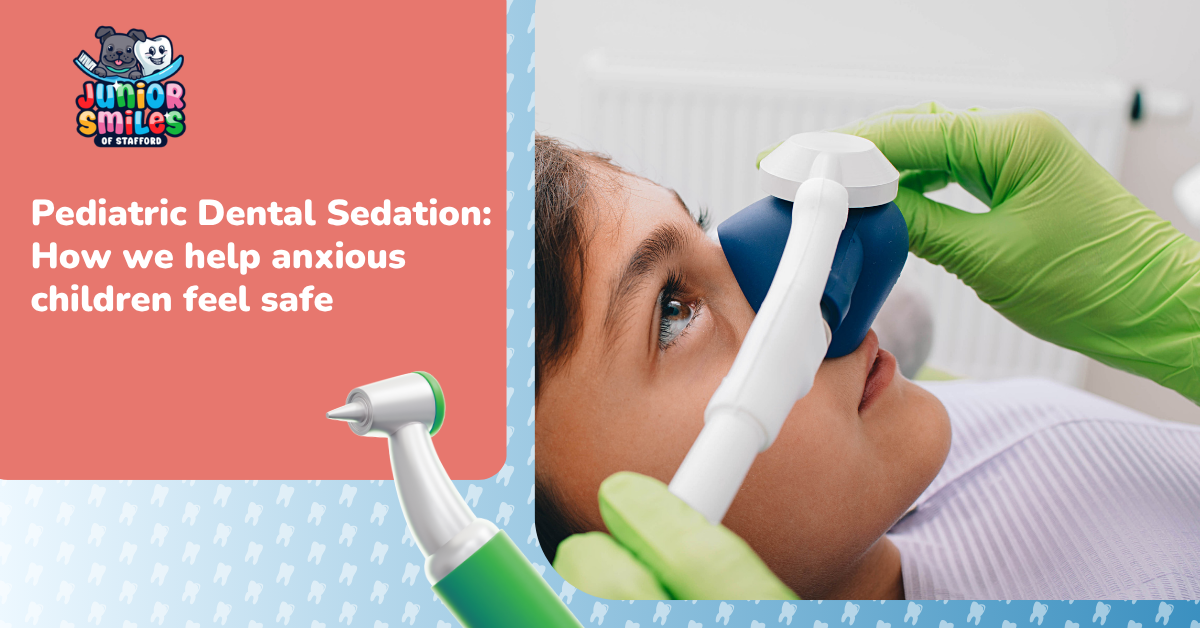
Nitrous oxide, sometimes called laughing gas, is inhaled through a small nose mask. It can reduce nervousness and help a child feel more at ease while remaining awake and responsive. The effect wears off quickly after the mask is removed, so many children can return to normal activities the same day. Not every child likes the mask, and nitrous oxide may not be enough for extensive treatment or severe anxiety.
Oral or other moderate sedation
For some children, medication taken before or during the appointment can create a deeper level of relaxation. A child may become sleepy, but the goal is still to maintain protective responses and allow the clinical team to monitor them closely. Instructions about fasting, arrival time, supervision, and activity afterward must be followed exactly.
General anesthesia
General anesthesia is a separate level of care in which the child is fully unconscious. It may be considered when a child cannot safely cooperate, when treatment is extensive, or when medical or developmental factors make other approaches unsuitable. Depending on the situation, this may take place with a qualified anesthesia provider in an appropriate facility. We explain the setting, credentials, monitoring, and recovery plan before treatment is scheduled.
How do we decide what is safest?
Before recommending medication, we review your child’s health history, allergies, current medicines, prior reactions to anesthesia or sedation, breathing concerns, and the planned dental treatment. Please tell us about snoring, sleep apnea, asthma, recent illness, loose teeth, and anything else that could affect breathing or recovery. A child who is sick may need to have the appointment postponed.
The type of medication, dose, monitoring, staffing, emergency equipment, fasting instructions, and recovery plan all depend on the level of sedation. Our team follows pediatric safety protocols and gives you written instructions so you know what to do before and after the appointment.
What can parents do before the visit?
Use simple, honest language. You can say, “The dentist will help your teeth, and we will be there to help you feel safe.” Avoid promising that nothing will feel unusual; instead, let us explain the sights and sensations in an age-appropriate way. Keep adult fears and frightening stories out of the conversation, and tell us what your child has heard or experienced already.
Follow every pre-visit instruction. Depending on the planned approach, that may include limits on food and drink, arranging a responsible adult to drive and supervise your child, and planning a quiet recovery period at home. Do not give your child an over-the-counter or prescription medication for anxiety unless the dental or medical team has specifically instructed you to do so.
What should we expect after sedation?
Children can be sleepy, unsteady, irritable, or less coordinated for a while afterward. Keep your child with a responsible adult and follow the discharge instructions. Offer foods and drinks only as directed, watch your child closely, and avoid school, sports, bicycles, and other activities until the care team says normal activity is appropriate.
Call the office or seek urgent medical help if your child has trouble breathing, cannot be awakened as expected, has repeated vomiting, develops unusual swelling, or you are concerned about their recovery. You will receive specific instructions for the medication and procedure used.
Questions to ask before scheduling
-
- Why are you recommending this level of sedation for my child?
-
- Who will administer and monitor the medication, and what training do they have?
-
- Where will treatment take place, and what monitoring and emergency equipment will be available?
-
- What should my child eat, drink, and take before the appointment?
-
- How long should we plan for recovery, and when can my child return to normal activities?
- What are the alternatives, and what happens if we wait?
Our goal is a safe, respectful dental experience
Sedation is one part of a larger plan. We want your child to feel heard, to understand what is happening, and to receive the care they need in the safest setting for their situation. Some children need only extra preparation and time. Others benefit from medication. We will explain the reasoning, answer your questions, and make a recommendation based on your child, not on a standard recipe.
If dental anxiety is keeping your child from receiving care, schedule a consultation with Junior Smiles of Stafford. We can talk through your child’s history, the treatment that is needed, and the approach that best supports a calm and safe visit.