First ask whether the tooth can be restored
A crown may be an option when enough usable tooth remains and the tooth can be treated predictably. Extraction may be appropriate when saving it is not reasonable. The diagnosis, the condition of the tissues, and the tooth’s remaining role matter before any prices are compared.
Our guide to why a child may need a crown covers the initial recommendation. The tooth extraction page explains reasons removal may be considered. Ask the dentist to apply those explanations to your child’s records.
If only one option is suitable, the financial discussion becomes how to manage that plan rather than choosing an unsuitable procedure because its listed fee is lower.

Compare the complete plans
Ask for written, itemized estimates. A quote labeled “crown” may not include every associated service, and an extraction fee may not describe all follow-up needs. The purpose of asking is to make the scope visible, not to assume extra procedures will be needed.
For the restoration plan, ask whether the estimate includes the crown, any required pulp treatment, diagnostic records, and the planned comfort care. For the extraction plan, ask about the removal, follow-up, and whether any spacing assessment or appliance is recommended.
Also confirm whether the estimate covers one tooth or several. If multiple teeth need care, ask for the diagnosis and recommendation for each one. A single child can have teeth that need different approaches.
Where a space maintainer fits into the comparison
After some early baby-tooth losses, a space maintainer may be recommended to preserve room for a permanent tooth. It is not necessary after every extraction. Ask whether it is relevant to the tooth being discussed and what monitoring it would require.
If it is recommended, include the appliance and related visits in the comparison. Our space maintainer information explains its purpose. Do not assume that choosing a crown guarantees avoiding future orthodontics, or that an extraction automatically means braces later.
Clarify insurance and your expected payment
Give the office your current plan information and ask for the treatment codes and estimated benefits. Then check the applicable deductible, benefit limits, network terms, and any authorization requirements with the insurer.
Ask what you would owe if the insurer pays less than the estimate. If the plan changes during treatment, ask how additional charges and consent would be handled. A written estimate is easier to review calmly than a total remembered from a conversation at the reception desk.
This guide does not assign a fixed price to either choice. Fees and coverage need to be checked for the actual treatment and the family’s plan.
Include the practical demands of treatment
Ask how many appointments are expected, what recovery may involve, and whether your child would need a different comfort plan for either option. School arrangements, caregiver availability, and follow-up visits may affect how your family manages care.
Those practical concerns are worth sharing. Tell the team what is difficult and ask which parts of the plan are flexible. Do not delay a painful or potentially infected tooth while comparing estimates without asking how urgently it needs attention.
Use the same scope when comparing two estimates
Imagine one plan lists a crown with any needed pulp treatment, while another lists an extraction alone. Before deciding that the second plan costs less overall, ask whether either estimate leaves out diagnostic visits, comfort care, or an appliance that may be recommended afterward. This is an example of how to compare scope, not a prediction that your child will need those services.
Request a separate description of optional and necessary items. Ask whether the expected number of visits differs and whether follow-up is included. If two dentists recommend different approaches, ask each to explain the diagnosis and expected result so you are comparing treatment goals as well as totals.
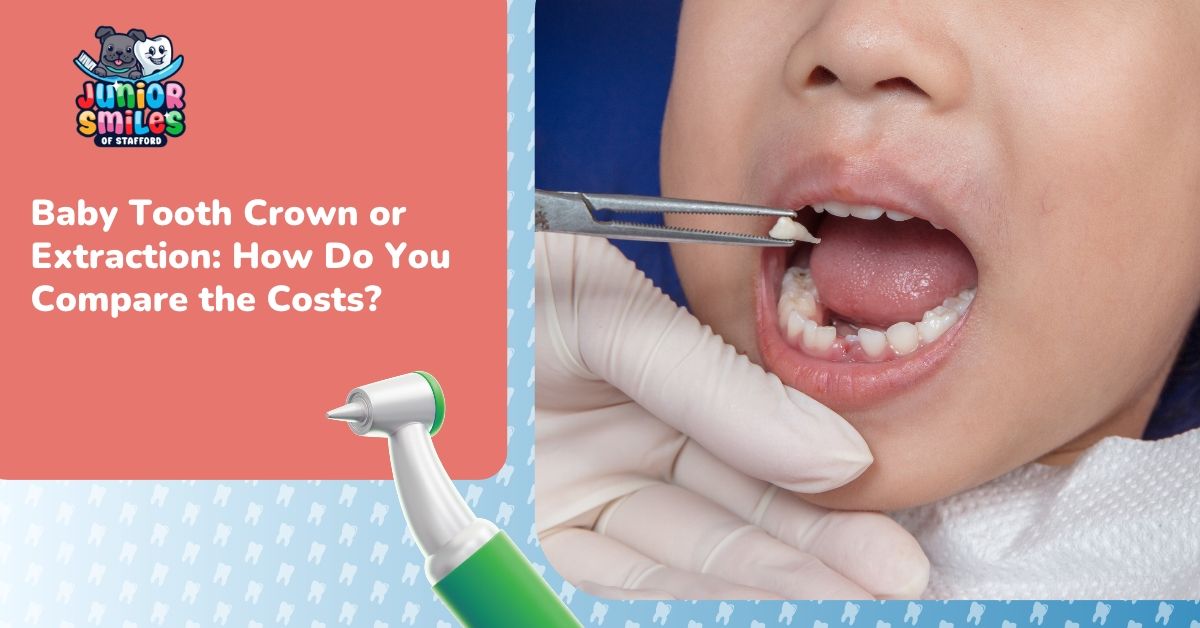
The ADA explains that crowns restore and protect weakened teeth. Removing the tooth achieves a different result. A fair comparison therefore needs the clinical reason for keeping or removing it, not only the fee beside the procedure name.
Understand the insurance terms on the estimate
A deductible is an amount you may need to pay before particular benefits apply. Coinsurance is a share of covered charges, while a benefit maximum limits what the plan pays within the relevant period. The exact definitions and application come from your own policy.
The ADA’s guide to choosing a dental plan recommends checking these costs and limits along with provider-network rules. Ask the office and insurer to explain the estimate using the actual procedures recommended for your child.
Be careful with a statement such as “covered at 50 percent.” Ask what amount that percentage applies to, whether you have remaining benefits, and what exclusions or other terms affect payment. Coverage language alone is not a final out-of-pocket quote.

Common questions about crown and extraction costs
Is extraction always cheaper
Not necessarily when the complete plan is considered, and a lower fee does not make it the appropriate option. Ask for the total expected costs of the clinically suitable choices. There is no universal price comparison that applies to every tooth, child, or insurance plan.
Can we choose the cheaper option if both are reasonable
Cost is a valid part of the discussion. Ask the dentist to explain the benefits, disadvantages, follow-up, and expected usefulness of each suitable option. Share your budget concerns directly so the conversation can include practical arrangements without assuming that a particular service must be chosen.
Can treatment wait until benefits renew
Ask the dentist how urgent the tooth’s condition is before considering a delay. An insurance calendar cannot determine whether waiting is clinically appropriate. If the child has pain, swelling, or another active concern, contact the office promptly. Ask what, if any, safe interim plan is available rather than postponing on your own.
A second opinion can clarify the decision
In his video about crown recommendations, Dr. Pope says parents are welcome to seek a second opinion. The aim is to understand the recommended care and feel comfortable with the decision. Ask for your child’s records and the reason for each proposed procedure so another dentist can assess the same concern.
Before deciding, ask: “Which options are suitable, what does each complete plan include, and what happens if we wait?” To discuss your child’s treatment, meet Dr. Zeina Estephan and Dr. Angelo Pope Jr.. A clear explanation and a complete estimate make the comparison much more useful than two procedure prices alone.