A child may need a dental crown when a tooth is too weakened or extensively damaged for a filling to protect it reliably. A white spot, small cavity, or color change alone does not tell us that a crown is necessary. We need to understand what caused the change and how much of the tooth is affected.
At Junior Smiles of Stafford, we encourage parents to ask what the examination shows and why a particular treatment is being recommended. You should leave the conversation understanding the purpose of the crown, the alternatives, and what could happen if treatment is delayed.
What does a crown do for a baby tooth?
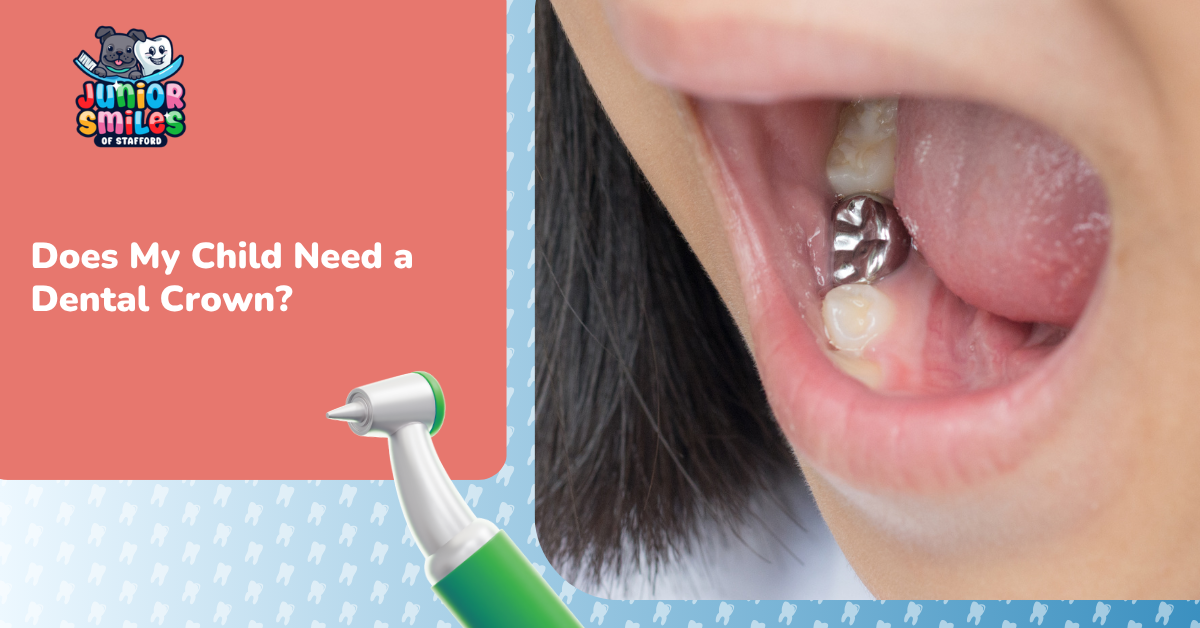
A crown covers the outside of a tooth to restore its shape and protect remaining structure. A filling repairs a more limited area. When several surfaces are affected or the tooth is structurally weak, a filling may not provide enough support.
Baby teeth still have work to do. They help children chew and maintain space as the mouth develops. Whether it makes sense to restore a particular tooth depends partly on how long it is expected to remain, its condition, and the health of the tissues around it.
“It will fall out eventually” is a useful starting point for a question, but not a complete treatment plan. Ask when that specific tooth is likely to be lost naturally and what the consequences of leaving it untreated would be.

Does a white spot mean my child needs a crown?
No. As we explain to families, white spots can have several causes. Possibilities include early decay, hypomineralization, fluorosis, or another enamel-development difference. The same color can appear in conditions that need different care.
We look at the location, surface, symptoms, and history of the tooth. Radiographs may be needed when they would help us understand areas that cannot be seen directly. A photograph or a quick look at home cannot reliably determine the depth of decay.
Our guide to spots on children’s teeth introduces this concern. If you notice a change, arrange an examination rather than trying to choose a treatment from the tooth’s color alone.
When might a crown make more sense than a filling?
Examples include a tooth with extensive decay, a large area of missing structure, or enamel that has broken down significantly. A crown may also be considered after certain pulp treatments, which address the tissue inside the tooth.
The AAPD’s restorative dentistry guidance supports selecting treatment according to the condition of the tooth and the child’s needs. It also emphasizes that repairing teeth does not, by itself, stop the disease process that causes cavities.
That means two conversations should happen together: how to treat this tooth and how to lower the risk of future problems. A strong restoration still needs daily cleaning and an appropriate prevention plan.
What other options might be available?
Options depend on the diagnosis. They are not interchangeable ways to treat every cavity, and availability does not mean each is suitable for your child.
Prevention and monitoring
Some early lesions without surface breakdown may be managed with preventive measures and planned reassessment. Ask what finding makes monitoring reasonable, what you should change at home, and when the tooth needs to be checked again.
Monitoring should have a purpose and a schedule. It is different from waiting indefinitely to see whether the tooth becomes painful.
A filling
A filling may suit a smaller damaged area when enough healthy tooth remains. Ask why a filling is or is not expected to last in this particular tooth. The answer should relate to the tooth’s condition, not just a preference for one material.
Silver diamine fluoride
Silver diamine fluoride can help arrest certain decay lesions, but it darkens the treated decayed area and does not rebuild missing tooth structure. It needs assessment and follow-up and may not be appropriate for a tooth with symptoms suggesting deeper disease.
Other treatment
If the tissue inside the tooth is affected, additional treatment may be needed. Some teeth cannot be predictably restored and may require extraction. Ask the dentist to explain whether the concern is the outer tooth structure, the tissue inside it, or both.
What should parents ask about crown materials?
Ask which type of crown is recommended, how it will look, and why it suits the tooth. Stainless steel and tooth-colored pediatric crowns have different features and placement requirements. Appearance is a reasonable concern, but the decision also involves fit, durability, remaining tooth structure, and the treatment your child can receive safely.
The AAPD’s detailed restorative recommendations discuss pediatric crown materials and their clinical uses. Ask your dentist to translate that choice into practical terms for your child rather than assuming one material is always best.
How can I prepare for the treatment discussion?
Bring a short list of questions and ask to see the examination findings or relevant radiographs. If several teeth need care, ask for the diagnosis and recommendation for each one. Teeth in the same mouth can need different treatments.
- Why is this tooth unlikely to do well with a filling?
- How much time do we have to make a decision?
- What are the benefits and limits of the alternatives?
- Will the tooth need treatment beyond a crown?
- What comfort measures are proposed?
- What is included in the estimate, and what could cost extra?
If your child is anxious, discuss that before the procedure. Our guide to pediatric sedation options covers related considerations. A recommendation for a crown does not automatically mean a child needs deeper sedation.

Frequently asked questions
Can a tooth need a crown if it does not hurt?
Yes. Pain is only one finding. The extent of damage and the strength of the remaining tooth can matter even when a child has no symptoms.
Is a crown a permanent solution for cavities?
A crown protects a treated tooth, but it does not eliminate cavity risk elsewhere or replace daily care. The tooth and surrounding gums still need cleaning and follow-up.
Is it reasonable to ask about another option?
Yes. Ask why each option is suitable or unsuitable and how urgent treatment is. You should understand the recommendation before deciding.
Get an explanation for your child’s tooth
If you have noticed a spot or have questions about a crown recommendation, contact Junior Smiles of Stafford. We can evaluate the concern and discuss care based on the tooth’s actual condition.