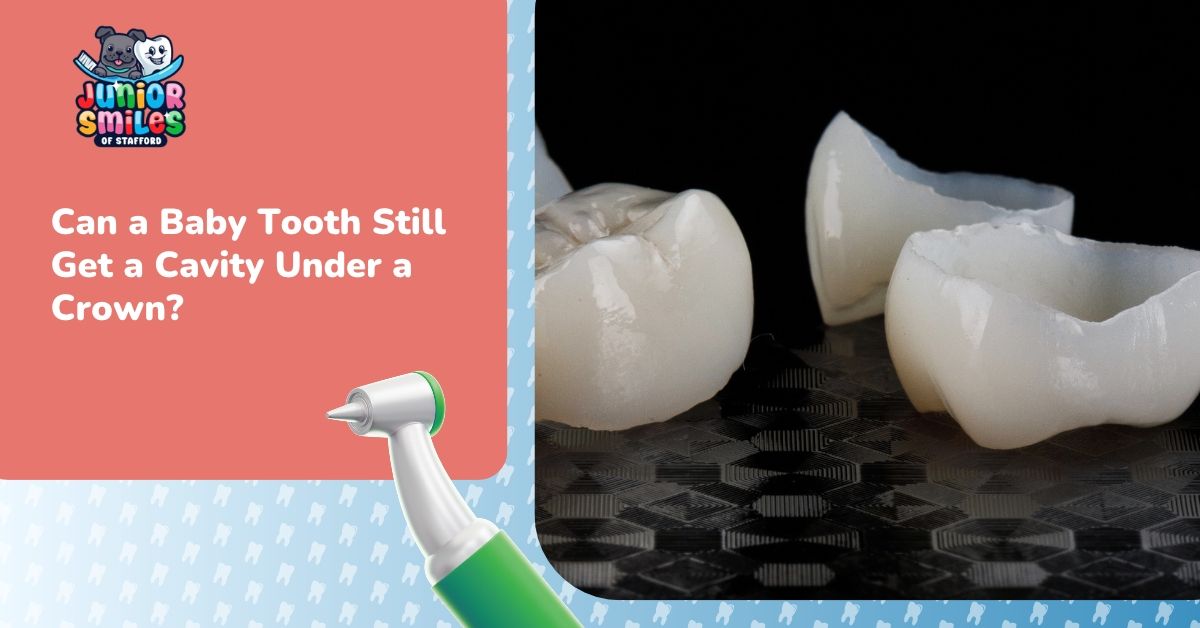
What a crown can and cannot do
A pediatric dental crown covers and restores a damaged tooth. It can help protect remaining structure, but it does not eliminate the factors that caused cavities or make the tooth maintenance-free.
The AAPD’s restorative dentistry guidance explains that placing a restoration alone does not stop the disease process. Ongoing prevention and follow-up remain part of care. Think of the crown appointment as one part of the plan rather than the last time that tooth needs attention.

How problems can develop around a crown
The point where a crown meets the tooth needs to stay clean and be checked. If the seal or fit changes, the dentist may need to assess the underlying tooth. Plaque and frequent exposure to sugars remain relevant to cavity risk even after restorative treatment.
Discomfort can also come from something other than a new cavity, such as gum irritation, a loose crown, a bite problem, or changes involving the tissue inside the tooth. Parents cannot reliably distinguish these possibilities by looking at the crown at home.
If you have noticed a dark line or color change, tell the dentist where it is and when it appeared. Color by itself does not establish a diagnosis. Our guide to spots on children’s teeth explains why appearance needs context.
Changes to report to the dentist
Call about new pain on chewing, a crown that moves, persistent gum swelling, or a bump on the gum near the tooth. Mention unusual taste, drainage, or whether the child is avoiding food on that side. A tooth can also develop a problem without obvious pain, which is one reason scheduled reviews matter.
If there is facial swelling, fever with dental symptoms, or a child who seems unwell, seek prompt professional advice. Trouble breathing or swallowing or rapidly spreading swelling requires emergency medical care.
For a crown that has come off, keep it safely in a container and contact the office. Do not put household glue on it or place a loose crown back in a child’s mouth.
What to bring to the appointment
Tell the office when the crown was placed and whether the tooth also had pulp treatment. If another practice provided the care, ask how to transfer the relevant records. Bring a short description of what changed and whether it is getting better or worse.
The dentist may examine the crown’s fit, the surrounding gums, and the bite, and may recommend radiographs if they would help answer the clinical question. Ask to see the findings and have them explained in plain language.
Does the crown always need replacing
No single treatment follows from the symptom alone. The next step depends on the cause, how much usable tooth remains, and the tooth’s expected role. A problem involving the gums is different from a damaged restoration or disease inside the tooth.
Ask what the proposed treatment would address and why other options are less suitable. Dr. Pope’s second-opinion video encourages parents to seek an explanation and another opinion when helpful. You should leave knowing what the dentist found and what the proposed next step would accomplish.
A dark area does not tell the whole story
An important distinction is whether the dentist is looking at new active disease, a change in the restoration, or something expected from the original treatment. Modern pediatric care includes selected techniques that manage decay beneath a well-sealed restoration without removing every affected area in the same way.
The AAPD’s restorative dentistry guidance discusses several approaches to managing caries. Seeing a dark area or being told that some affected tissue was left does not, by itself, prove a crown was placed incorrectly. Ask what treatment was originally used and how the current findings compare with earlier records.
This is also why an online photograph cannot reliably answer whether a tooth is “rotting under the crown.” The useful question is what evidence shows about the tooth now and whether it needs additional care.
Turn daily prevention into a specific routine
The ADA’s guidance for babies and children recommends fluoride toothpaste from the arrival of the first tooth. Use a smear about the size of a grain of rice for children younger than three, and a pea-sized amount from ages three through six. Supervise brushing and help with areas the child cannot clean effectively.
Clean between teeth that touch, using the technique your dental team demonstrates. Ask for an approach that works around your child’s restoration rather than avoiding it. If cleaning catches or repeatedly causes discomfort, report that specific problem.
Also describe the pattern of snacks and drinks during the day. A prevention discussion should consider the routine as a whole rather than blame one food or one caregiver. Ask which changes would make the biggest practical difference for your child.

Common questions about crowned baby teeth
Can a white crown get a cavity
The crown material does not develop tooth decay, but the natural tooth still can. The same distinction applies to metal crowns. Appearance and material alone do not remove the need for cleaning and dental review. If something changes near the edge, arrange an assessment instead of assuming the crown makes the tooth immune.
Does pain mean the crown must come off
Not necessarily. The dentist first needs to determine the cause. Describe when the pain happens, how long it lasts, and whether the crown feels loose or the bite feels different. Those details help guide the examination; they do not establish the diagnosis on their own.
Should we simply wait for the baby tooth to fall out
Ask the dentist how close that tooth is to natural loss and whether waiting is appropriate. Do not use the fact that it is a baby tooth as a reason to ignore pain or swelling. A planned review is different from leaving a new problem unassessed.
Keep prevention specific to your child
Help your child brush twice daily with fluoride toothpaste in the age-appropriate amount, and clean between teeth as the dental team shows you. Ask for a demonstration around the crown rather than avoiding that area out of fear of disturbing it. Discuss frequent snacks or drinks and the prevention schedule recommended for your child’s risk.
For questions about a crowned tooth, learn more about Dr. Zeina Estephan and Dr. Angelo Pope Jr.. Bring the concern in early so the next decision is based on an examination, not a guess.