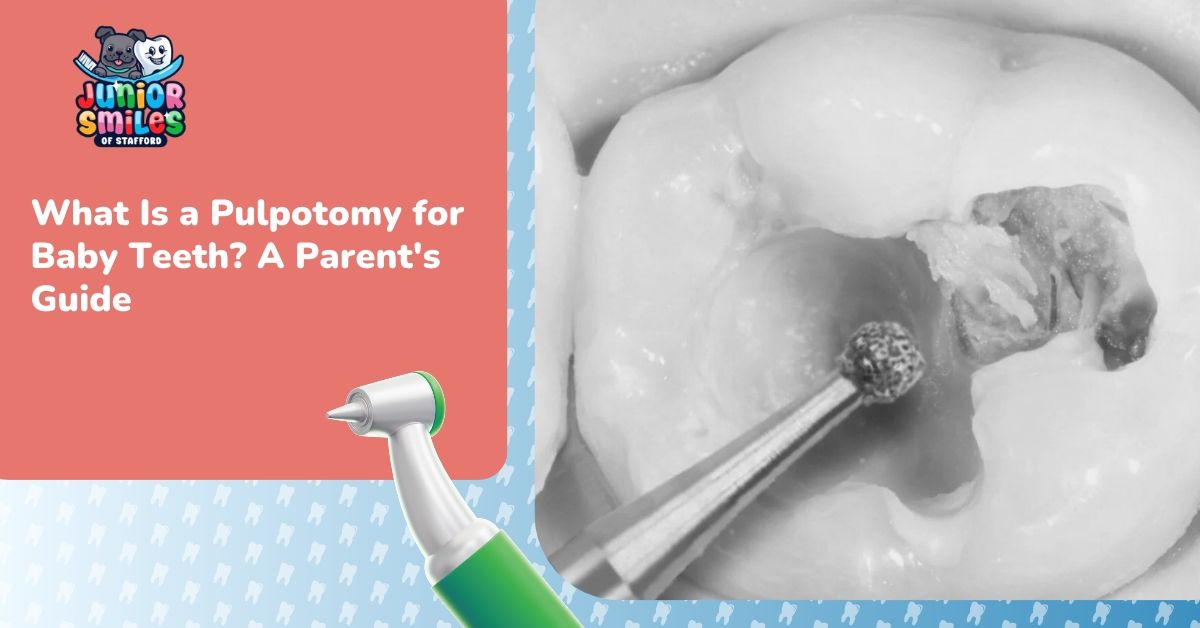
A pulpotomy removes pulp tissue from the crown portion of a tooth while aiming to preserve suitable living tissue in the roots. The pulp contains nerves and blood vessels. For parents hearing this term at a dental visit in Stafford VA, the first question is why this particular tooth may benefit from the procedure.
At Junior Smiles of Stafford, we want families to understand the diagnosis and the proposed plan. A deep cavity does not automatically mean that every child needs the same pulp treatment.
Why the condition of the pulp matters
The dentist considers symptoms, examination findings, and relevant radiographs when assessing the tooth. The key question is whether the remaining tissue and tooth can support the proposed treatment. The amount of tooth structure left and the tooth’s role also affect the decision.
Pulpotomy is a form of vital pulp therapy. It should not be described as a universal treatment for any infected or abscessed baby tooth. Some findings may point toward another treatment. Ask the dentist to explain what supports the recommendation in your child’s case.
The pulpotomy service page introduces the procedure. This guide helps you prepare for the treatment discussion rather than decide from symptoms alone.

Pulpotomy and pulpectomy are different procedures
In a pulpotomy, the dentist removes pulp from the upper portion of the tooth and preserves appropriate tissue in the roots. A pulpectomy involves removing pulp from the crown and root canals. They have different indications and treatment steps.
You may hear “baby root canal” used informally. Ask which procedure is actually proposed and request that name on the written treatment plan. Clear terminology helps you understand an estimate or compare a second opinion.
The AAPD’s pulp therapy guidance emphasizes choosing care according to pulp health, whether the tooth can be restored, and the alternatives. Your dentist should translate those considerations into an explanation you can follow.
What happens during the appointment
The team first discusses consent and the comfort plan. Local anesthetic is used as appropriate, and any sedation or anesthesia requires its own assessment and instructions. Needing pulp treatment does not automatically determine which comfort method a child needs.
For a pulpotomy, the dentist accesses the pulp chamber, removes the intended tissue, assesses the remaining tissue, and places a suitable material before restoring the tooth. Findings during treatment may affect the plan. Ask beforehand what changes might be necessary and how the team would discuss them with you.
Our article on pediatric dental sedation explains the separate comfort conversation. In his sedation video, Dr. Pope discusses considering age, behavior, and the amount of treatment; these factors help shape an individual comfort plan.
Why a crown may also appear on the plan
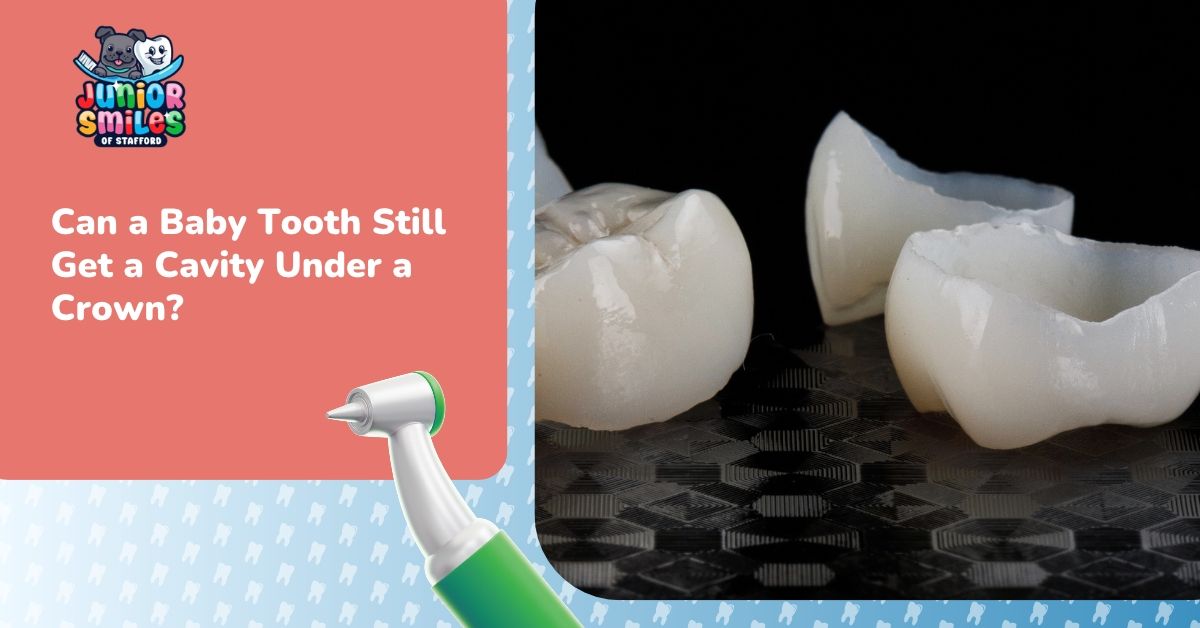
Treating the pulp and restoring the outside of the tooth solve different problems. A baby molar with significant damage commonly needs a crown after pulp treatment to provide a durable restoration and seal. The recommended restoration depends on the tooth and its condition.
Ask whether the estimate includes the final restoration and whether it will be completed at the same appointment. Our guide to why a child may need a crown offers context for that part of the decision.
Questions worth asking before consenting
- What findings make this tooth suitable for a pulpotomy?
- What are the reasonable alternatives and their limitations?
- How long is this baby tooth expected to remain useful?
- What is included in the treatment and restoration estimate?
- What symptoms should we report afterward, and when is follow-up?
In his second-opinion video, Dr. Pope encourages parents to seek clarification when they need confidence in a treatment plan. Bring your questions and ask how much time is available to consider the options.
A deep cavity does not always mean removing the pulp
Treatment choices depend on the diagnosis. For certain deep lesions in a vital baby tooth, indirect pulp treatment may be considered. This approach aims to manage the decay and seal the tooth while avoiding unnecessary pulp exposure. It is different from a pulpotomy, which removes pulp tissue from the crown portion.
The AAPD’s guideline on vital pulp therapies evaluates several approaches rather than recommending one procedure for every deep cavity. Ask which findings make the proposed option preferable for your child’s tooth.
If the dentist intentionally leaves some affected dentin beneath a sealed restoration as part of a selected technique, that is not automatically evidence that care was incomplete. Ask what method was used, what its purpose is, and how the tooth will be monitored. A description of the technique is more useful than the assumption that every cavity must be treated identically.
Understanding the material and the final seal
Parents may hear unfamiliar material names during the discussion. Ask which pulp-treatment material is proposed and why it is appropriate. You do not need to choose the product yourself, but you can ask how the recommendation relates to current evidence and your child’s situation.
The final restoration also matters because pulp treatment and protection of the remaining tooth are parts of the same care plan. Confirm what will be placed over the treated tooth, when it will be completed, and what to do if it loosens. Ask how the team would manage an unexpected finding during the procedure before you consent.

Common questions about pulpotomy
Why treat a baby tooth that will eventually fall out
The relevant question is how much useful time remains and whether the tooth can be maintained appropriately. Some baby teeth still need to function for a considerable period. Ask the dentist to explain the likely timing of natural loss and the advantages and limitations of keeping that particular tooth.
Does a tooth need pulp treatment if it does not hurt
Pain is one part of the history, not the complete diagnosis. A dentist may identify a problem through the examination and radiographs even when a child has not complained. Equally, pain alone does not tell a parent which pulp procedure is appropriate. Ask to see the findings that support the recommendation.
How will we know whether treatment has been successful
Ask what the dentist will evaluate at follow-up and whether radiographs will be needed at an appropriate interval. Comfortable chewing is useful information, but the review may assess more than symptoms. Keep the scheduled checks and report new changes rather than assuming that the absence of pain means no monitoring is needed.
After treatment and follow-up
Follow the child’s written instructions for eating, cleaning, medicines, and protecting numb lips or cheeks. Contact the office about worsening pain, new swelling, or a damaged restoration. Difficulty breathing or swallowing, or rapidly spreading facial swelling, needs urgent medical attention.
Keep the follow-up visits so the dentist can assess the treated tooth. To discuss a recommendation, learn more about Dr. Zeina Estephan and Dr. Angelo Pope Jr., and bring any existing treatment records to your appointment.