Your child has finished a filling and is ready for a snack. Their lip still feels strange, so they keep touching it or catching it between their teeth. This is the point when an adult’s attention can prevent an injury after the appointment.
While the mouth is numb, help your child avoid biting, sucking, or chewing the lip, cheek, or tongue. Follow the dental team’s instructions about eating and drinking, and wait until normal sensation returns before offering foods that require chewing.
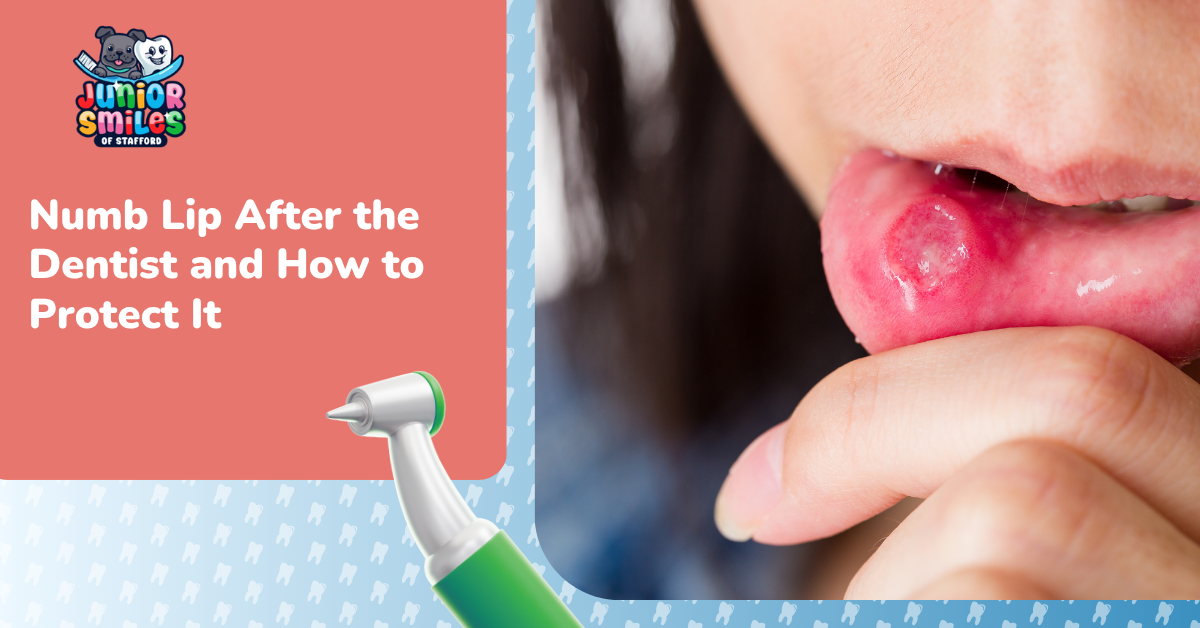
A child can injure numb tissue without feeling the usual warning. If a bite has already happened, contact the treating office for advice, especially if there is swelling, a wound, or uncertainty about what you are seeing.

Why the lip can stay numb after treatment
Local anesthetic temporarily reduces sensation around the area being treated. Depending on the injection and procedure, the lip, cheek, or tongue may also feel numb. That sensation can last beyond the dental work itself.
The American Academy of Pediatric Dentistry discusses lip and cheek biting after local anesthesia and recommends that caregivers receive realistic guidance about numbness and precautions. Many minor bites heal without complications, but bleeding and infection are possible.
Ask the team how long numbness is expected to last for the medicine used. A time estimate helps you plan; it does not replace checking that normal feeling has returned. Call if the numbness lasts longer than you were told to expect.
Being alert and talkative does not mean the lip has recovered its usual feeling. Your child may be perfectly awake and still need help protecting it.
Plan the trip home and the next meal
Before leaving, ask these questions:
- Which parts of the mouth are numb?
- What may my child eat or drink, and when?
- How long should an adult keep a close watch?
- Whom should we call if we notice a bite or unusual swelling?
Put those instructions where the next caregiver can find them. If a grandparent is collecting your child or they are returning to another household, tell that person about the numbness before the handoff.
Our dental fillings information also explains the importance of waiting for numbness to wear off before a meal. The filling itself may be ready for use while the surrounding soft tissues still need protection.
Keep hot food and drinks away from a numb mouth. Do not offer chewing gum or ask your child to bite the lip to “test” whether it is still numb. Follow any additional procedure-specific instructions, particularly after an extraction or sedation.
Give your child a simple explanation
You can say: “Your lip feels different because of the medicine. Leave it alone while the feeling comes back. Tell me if it is bothering you.”
There is no need to ask a young child to judge whether a bite would hurt. The absence of pain is part of the problem. An adult should watch for chewing or sucking on the area and redirect it gently.
If your child repeatedly touches the lip, offer an activity that keeps their hands occupied while you supervise. Tell the team in advance if your child often chews their cheeks or finds unusual sensations difficult to tolerate. Ask for an aftercare plan you can realistically follow.
Instructions such as “don’t bite” are easier to act on when the adults know when to watch, what to look for, and when they can relax those precautions.
What to do if your child bites the lip
Stop further biting and contact the treating office. Tell the team when treatment ended, which part of the mouth was numb, when you noticed the injury, and whether your child can drink comfortably.
Junior Smiles’ emergency dental care guidance advises gently cleaning a bitten lip or cheek with water and using a cold compress. Apply the compress outside the mouth with a cloth barrier. Follow the clinician’s advice for your child and avoid repeatedly pulling the lip open to inspect it.
A healing mouth wound can look white. Seattle Children’s mouth injury guidance explains that this appearance can occur during healing; it does not establish the cause of a particular sore. Describe the whole picture to the dentist rather than diagnosing infection from color alone.
Ask before using a numbing gel, mouth rinse, or leftover medicine. If the office requests a photo, use the sharing method they recommend. A photo can help with the conversation but may not replace an examination.
Know when to seek urgent help
Call 911 for trouble breathing or major bleeding that will not stop. Seek urgent medical care if your child has trouble swallowing fluids or saliva, a deep or gaping cut, or rapidly worsening symptoms.
Call the dentist promptly for increasing pain or swelling, fever with a concerning mouth wound, difficulty drinking, or any injury you are unsure how to manage. Do not assume that all swelling after dental treatment is a minor bite.
For Junior Smiles patients, call (540) 699-2441 and describe what happened. Follow the voicemail instructions if the office is closed. Use the phone rather than an online appointment request when the concern needs prompt advice.

Frequently asked questions
How many hours will my child’s lip stay numb?
That depends on the anesthetic, injection, and procedure. Ask the treating team for the expected duration and their eating instructions. Call if numbness continues beyond the time they described.
Can my child eat soft food while still numb?
Follow the specific instructions from the dental team. Soft food still involves mouth movement and may not be appropriate while your child cannot feel the lip or tongue normally. Ask about drinks and food before leaving.
Does a white sore mean the bite is infected?
Not necessarily. Healing mouth wounds can appear white. Contact the dentist about the injury, especially if pain or swelling is increasing, fever develops, or drinking becomes difficult.
Can a numb lip happen after sedation too?
Yes. Local anesthetic may also be used during a procedure involving sedation or general anesthesia. Follow both the numb-mouth precautions and the separate recovery instructions you receive.