Dental sealants are a useful way to protect the chewing grooves of children’s back teeth. They add a thin coating over places that can be difficult to clean. Whether your child needs them depends on the teeth, their condition, and your child’s risk of cavities.
At Junior Smiles of Stafford, we often explain sealants by asking parents to picture the little grooves across a surface. A coating helps keep food from settling into those narrow spaces. It is a small preventive procedure, but the decision still deserves a clear explanation.
What do sealants actually protect?
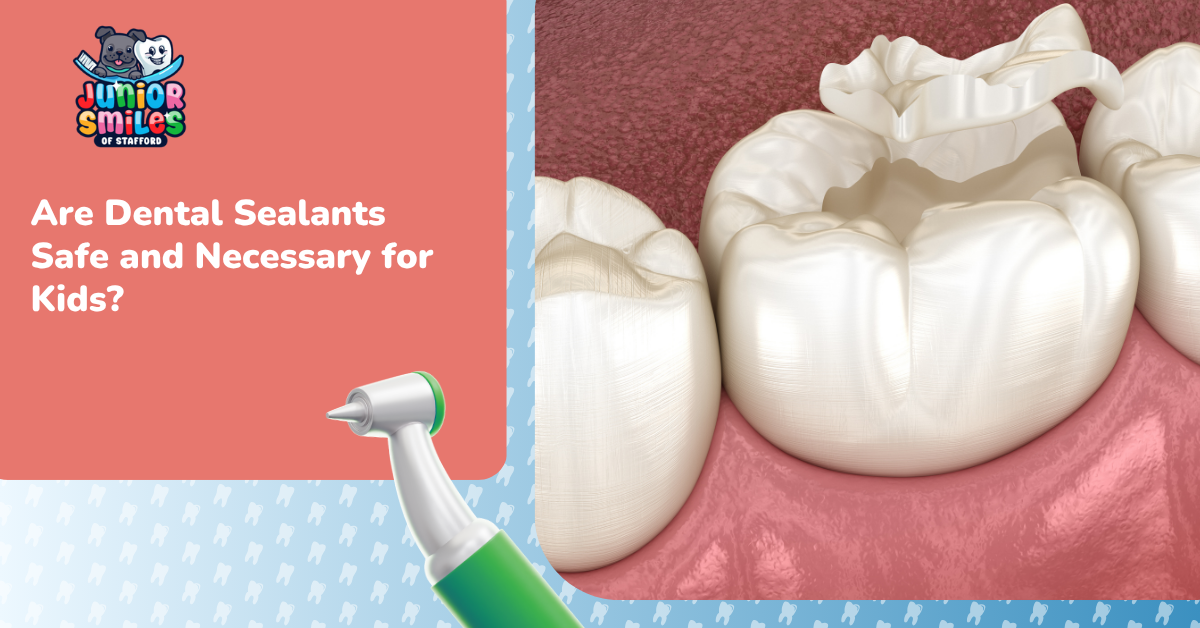
The biting surfaces of molars are not flat. Their grooves help with chewing but can also collect food and plaque. A sealant flows into selected pits and grooves and forms a barrier over that surface.
It does not cover the whole tooth like a crown. It also does not protect the spaces between teeth, the gumline, or the tooth from a sports injury. Understanding its job helps explain why we still emphasize brushing, cleaning between teeth, and regular examinations.
For parents, a useful question is: “Which surfaces are you trying to protect?” Ask the dentist to point out the grooves and explain why those areas deserve extra attention.

What does the evidence say?
The joint AAPD and ADA guideline on pit-and-fissure sealants supports their use to prevent decay on chewing surfaces of primary and permanent molars in children and adolescents. It also supports their use for selected early lesions that have not developed a cavity with surface breakdown.
That is different from covering any visible hole and hoping it stops growing. We first need to assess whether the tooth is suitable for a sealant or requires another approach. If an area is already damaged, ask the dentist to explain the finding before choosing treatment.
Are dental sealants safe for children?
Sealants are an established preventive treatment. The American Dental Association’s information for parents describes them as safe and addresses questions about the very small amounts of BPA associated with some materials. The ADA does not consider that exposure a reason to avoid recommended sealants.
Tell us about known allergies or previous reactions to dental materials. If you have a specific material concern, ask what product is proposed and whether alternatives are suitable. We should discuss the actual material rather than assume every sealant has the same ingredients.
“Safe” should still come with an explanation of what is being placed and why. Parents should feel comfortable asking those questions without feeling that they are delaying care or being difficult.
Does my child need sealants if they brush well?
They may. Brushing is essential, but narrow grooves can be hard to clean even when a child is trying carefully. A sealant adds protection at those sites; it is not a judgment about how well your family manages home care.
We look at the grooves, the tooth’s eruption, existing signs of decay, and your child’s overall risk. A history of cavities can change the discussion, as can trouble reaching the back teeth. The recommendation should identify which teeth would benefit and why.
You do not need to wait for a cavity before asking about sealants. Equally, age alone does not determine whether every available tooth should receive one. An examination connects the preventive plan to the teeth actually present.
When should we ask about sealing new molars?
Permanent molars can appear behind the baby teeth without a baby tooth falling out first. Parents may not realize that a new back tooth is intended to last into adulthood. Ask about new molars during routine checkups, especially when brushing the very back of the mouth becomes more difficult.
Timing also depends on whether the tooth can be isolated appropriately for the material being used. If the dentist suggests waiting or using a different approach, ask what they are watching for and when the tooth should be reassessed.
Sealants can also be considered for selected baby molars. Their usefulness depends on the tooth’s risk and condition, rather than a rule that only permanent teeth can receive them.
What is the appointment like?
We describe routine sealant placement as painting a thin protective layer over the grooves. It generally involves cleaning and preparing the surface, keeping the tooth dry, placing the material, and allowing or helping it to harden. The steps vary with the product.
Routine preventive placement usually does not require drilling or numbing. A child may still find the suction, taste, or need to keep their mouth open unfamiliar. Tell us if those sensations are difficult so we can explain the steps and help your child prepare.
The procedure is often brief, but the total appointment depends on the number of teeth and the child’s needs. We avoid promising a precise finish time before seeing how the visit is going.
How long do sealants last?
Sealants need periodic checks. We look for wear, loss of material, and changes in the tooth underneath or around the sealed area. A repair or replacement may be appropriate if protection is no longer complete.
Keep regular appointments even when the sealed teeth feel fine. At home, continue brushing and cleaning between the teeth. Tell us if your child notices a persistent bite change, sensitivity, or a rough area rather than assuming it is an expected part of having a sealant.
What about cost and insurance?
Ask for an estimate that identifies the teeth proposed for treatment. Insurance benefits may depend on age, tooth type, and replacement intervals. Confirm your own plan’s rules rather than assuming that a sibling’s coverage or a previous claim guarantees payment.
If cost affects the decision, say so before the appointment. Ask which teeth are the highest priority and whether follow-up visits or repairs involve separate charges. A useful prevention discussion includes both the clinical reasons and the practical plan.

Frequently asked questions
Do sealants replace fluoride toothpaste?
No. Sealants protect selected chewing grooves. Fluoride toothpaste and daily cleaning remain part of cavity prevention.
Can a sealed tooth still develop a cavity?
Yes. Unsealed surfaces remain vulnerable, and sealants can wear or be lost. Keep routine checkups and daily cleaning.
Should a child with white spots get sealants?
The cause and location of the spots need assessment first. A sealant is not the right treatment for every white spot or enamel change.
Ask about prevention at your next visit
If you have noticed discoloration, our guide to spots on children’s teeth explains why an examination matters. To discuss whether sealants suit your child’s molars, contact Junior Smiles of Stafford and bring your questions to the next visit.