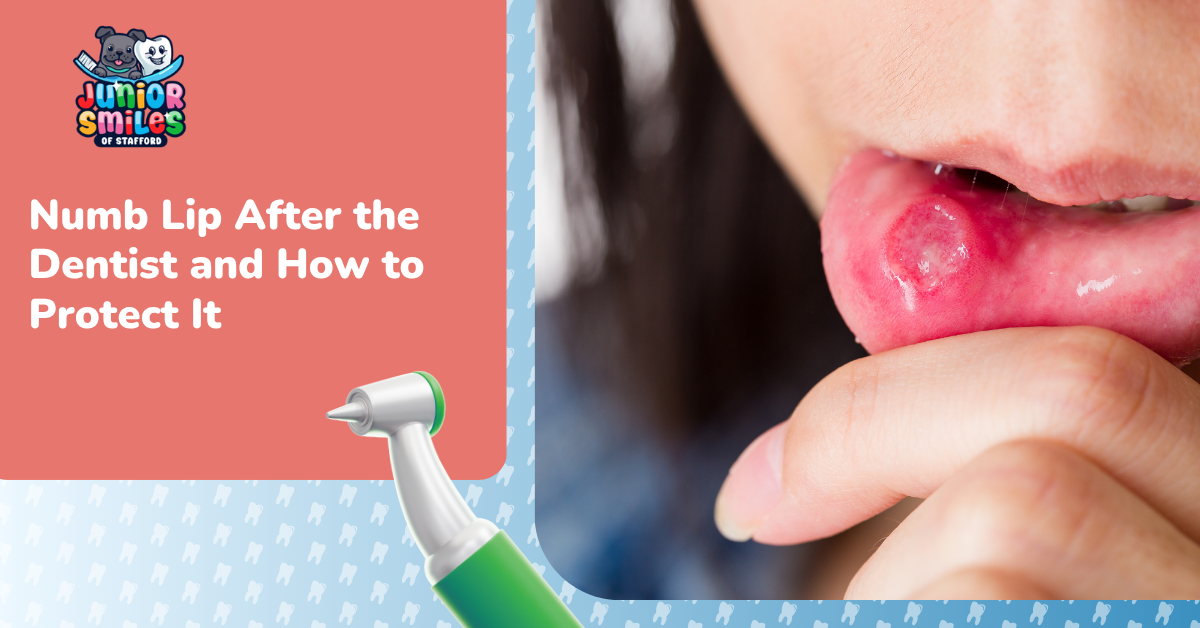
You lift your child’s lip while brushing and notice a blue or purple bump where a tooth should be coming in. It can look like a bruise or a small blister. One possible explanation is an eruption cyst: a pocket of fluid in the gum over an emerging tooth.
Many eruption cysts settle as the tooth comes through, without a procedure. But we would not ask you to diagnose a new gum bump by comparing it with a picture online. Let your child’s dentist know what you have noticed so the location, symptoms, and stage of tooth development can be checked.
The first thing to remember is simple: do not pop or squeeze it. The appearance alone does not tell you that it needs draining.

What is an eruption cyst?
As a tooth moves toward the surface, fluid can collect in the soft tissue over its crown. This creates a raised area of gum. It can happen with baby teeth or permanent teeth, so an older child can have one even after the toddler teething years are over.
Blood mixed into the fluid can make the swelling look blue, purple, or dark brown. You may hear this called an eruption hematoma. The American Academy of Pediatric Dentistry describes a range of colors, depending on how much blood is present.
The word “cyst” understandably gets a parent’s attention. In this setting, it describes the fluid-filled tissue over a developing tooth. It does not, by itself, mean that your child has an infection or needs surgery.
What would make us suspect an eruption cyst?
The relationship to the tooth underneath is important. A localized bump directly over an expected erupting tooth fits a different pattern from swelling beside an existing tooth or a sore inside the lip.
A dental examination helps us put those details together. We will want to know when the bump appeared, whether its size has changed, and whether your child is comfortable. A clinical series of eruption cysts described them with both primary and permanent teeth; some children had discomfort when chewing, while others did not.
Color alone cannot identify the cause. A blue bump is a reason to ask what is happening, not a diagnosis. If the area followed a fall, your child has a damaged tooth nearby, or there is drainage, tell us that too.
What should you tell us when you call?
You do not need dental terminology. Start with your child’s age, where the bump is, and when you first saw it. For example: “There is a purple swelling behind the last baby tooth on the lower left. I noticed it yesterday, and chewing seems uncomfortable.”
It helps to have these details ready:
- Is this an area where a new tooth is expected?
- Is the swelling staying the same or becoming larger?
- Is your child eating and drinking normally?
- Have you noticed bleeding, drainage, fever, or facial swelling?
- Was there a recent injury to the mouth?
A photograph may help explain what you are seeing if the office requests one. It does not replace an examination. There is no need to repeatedly press on the bump or make your child open wide for photos if that is uncomfortable.
Will my child need an X-ray or treatment?
An eruption cyst is often recognized during an examination. Depending on the findings, an X-ray may help assess the underlying tooth and other possible causes of the swelling. The soft-tissue bump itself is not the same thing as a cyst within the jawbone.
If the dentist confirms an uncomplicated eruption cyst, observation may be the appropriate plan. The AAPD explains that the tooth can erupt through the tissue without treatment. If the swelling enlarges and becomes uncomfortable, the dentist may consider a small procedure to remove the tissue covering it.
That decision should be based on your child’s findings, rather than how dramatic the bump looks in a photograph. At the visit, ask us to explain what supports the diagnosis and what would change the plan. “We can watch this” should come with clear follow-up instructions.
What does watching it at home actually mean?
Monitoring should be manageable. Note when you first noticed the swelling and whether your child’s comfort, eating, or the appearance of the area changes. Follow the review interval your dentist recommends rather than checking the gum repeatedly throughout the day.
Keep the rest of your child’s normal oral-care routine going, and ask how to clean the tender area comfortably. Avoid picking, puncturing, or rubbing the swelling. Do not apply a home remedy in an attempt to make the tooth break through faster.
If we recommend observation, useful questions before you leave include:
- When should we check in again if the tooth has not appeared?
- Which changes mean we should call sooner?
- What should we do if brushing or eating becomes uncomfortable?
Cleveland Clinic advises contacting a dentist if a suspected eruption cyst persists beyond two weeks, or if it bleeds, hurts, or produces pus. That is a reason to follow up, not a promise that every bump will disappear within exactly two weeks.
When does a gum bump need prompt attention?
Contact your child’s dentist promptly for increasing pain, pus, facial swelling, fever with dental symptoms, or difficulty eating or drinking. Those findings should not be dismissed as ordinary teething or assumed to be an uncomplicated eruption cyst.
Seek emergency care if swelling causes trouble breathing or swallowing. A child who is becoming very unwell needs urgent medical assessment. These are warning signs of a potentially serious problem, not the expected course of a simple eruption cyst.
You also do not need to wait for pain before asking about a lump that remains, changes, or does not seem connected with an emerging tooth. Let the dentist reassess it rather than continuing to use the original explanation indefinitely.
Frequently asked questions
Does a blue bump mean the tooth underneath is bruised?
Not necessarily. Blood within an eruption cyst can change the color of the overlying gum. A recent injury is still important to report, because an examination is needed to distinguish the possibilities.
Can an eruption cyst happen with an adult tooth?
Yes. Eruption cysts can develop over permanent teeth as well as baby teeth. Your child’s age and the location of the swelling help the dentist work out which tooth may be emerging.
Should I drain the bump to help the tooth come in?
No. Leave it alone and ask your child’s dentist to assess it. If a procedure is appropriate, the dentist should perform it after confirming the diagnosis.
What if the bump disappears before the appointment?
Tell the office what changed and whether the tooth has appeared. Keep any photograph you already took and describe any ongoing symptoms. The dental team can advise whether your child still needs that visit.

Let us help you work out what you are seeing
You do not have to decide whether a gum bump is “serious enough” before contacting us. At Junior Smiles of Stafford, we can help you decide the next step based on your child’s symptoms and an examination. You can meet our pediatric dental team or request an appointment.
When you get in touch, mention that you are calling about a new gum swelling. That gives us more useful information than calling it teething before we have had a chance to assess it.