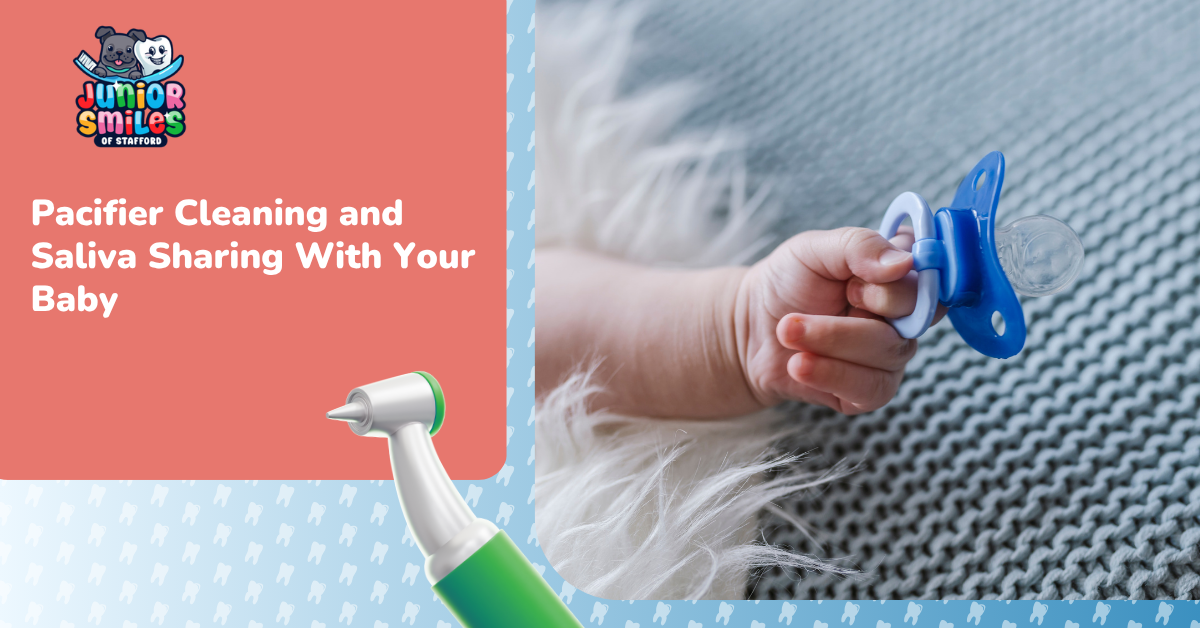
The pacifier falls out. Your baby wants it back. Putting it in your mouth for a quick clean can feel like the easiest solution, especially when you are nowhere near a sink.
My advice is to skip that step. Clean the pacifier according to its care instructions, rather than using your mouth. Saliva can carry bacteria associated with tooth decay, and putting the pacifier in your mouth can pass those bacteria to your baby.
If you have already done this, you have not guaranteed your child a cavity. Dental health depends on several things working together. This is simply one habit you can change from today onward.

Why does sharing saliva matter?
A baby does not inherit every part of a parent’s dental history. Genetics can influence tooth development, but so can the conditions around the teeth as a child grows. Food, drinks, fluoride exposure and daily care all matter.
Saliva sharing is another part of that picture. A spoon that goes from your mouth to your baby’s mouth, or a pacifier you suck clean, can transfer oral bacteria. Some of those bacteria contribute to the process that causes tooth decay.
The American Academy of Pediatric Dentistry recommends minimizing saliva-sharing activities such as sharing utensils and cleaning a pacifier in an adult’s mouth. That recommendation gives families a specific, manageable precaution. It does not mean that every shared spoon causes decay.
Think about the decision in front of you: can you use a clean spoon or a clean spare pacifier instead? When the answer is yes, that is the easier habit to build.
What should you do when a pacifier falls?
Start with the manufacturer’s cleaning instructions. Materials and designs vary, so a cleaning method that suits one pacifier may not suit another. Your baby’s age and any special health needs can also affect the advice you receive.
For a dropped pacifier, wash it with soap and water and rinse it thoroughly, following the product’s directions. For young infants, ask your pediatrician about sterilizing and follow the manufacturer’s approved method. Allow a heat-cleaned pacifier to cool completely before offering it again.
Inspect it while you clean it. A damaged or worn pacifier should be replaced according to the manufacturer’s guidance. Cleaning cannot make a torn nipple safe again.
The practical difficulty usually comes when you are out. A little preparation helps:
- Keep a clean spare in a clean, protected container in the diaper bag.
- Keep the dropped pacifier separate from the clean spare until you can wash it.
- Tell another caregiver where the spare is, so the plan works when you are not there.
- Replenish the clean spare when you get home, rather than discovering an empty case on the next outing.
A quick wipe on your shirt is not the same as washing. If you cannot clean the pacifier properly, use the clean spare or wait until you can clean it.
The same idea applies at mealtimes
The American Academy of Pediatrics advises families to avoid tasting a baby’s food and then feeding the baby from that same spoon. Use a separate tasting spoon. If that spoon needs to go back into the food, switch to a clean one.
Keep the baby’s feeding utensils separate from the utensils adults are using. The goal is a routine that does not depend on remembering at the last second, when you are holding a hungry child and trying to finish a meal.
For example, set out the baby’s spoon and your tasting spoon before feeding starts. If grandparents or another caregiver feed your baby, show them the arrangement. A short explanation is enough: “We’re keeping the baby’s spoon separate and washing pacifiers instead of putting them in our mouths.”
Make the alternative convenient. A clean spare and an extra spoon are easier to remember than a long list of things to avoid.
Already shared a spoon or cleaned a pacifier in your mouth?
Start with the next use. Wash the pacifier, set aside clean feeding utensils and carry on with your baby’s normal care. A past saliva-sharing moment does not tell us whether your child will develop tooth decay, and it is not a reason to blame yourself.
Do not try to disinfect your baby’s mouth or use adult mouthwash to undo the contact. Bring concerns about your child’s oral care to a pediatric dentist so the advice fits their age.
It is also reasonable to make time for your own dental care. Looking after a baby’s health can fill the calendar quickly, but an adult’s untreated dental problems deserve attention too. A family approach includes the caregivers as well as the child.
At Junior Smiles of Stafford, we want parents to feel comfortable bringing up the small, everyday questions. You do not need to wait until something hurts to ask about a habit you are unsure of.
Keep this habit in perspective
Pacifier hygiene is one part of prevention. It cannot replace toothbrushing, appropriate fluoride use or dental visits. Once the first tooth appears, the daily routine needs to include brushing with an age-appropriate amount of fluoride toothpaste.
The American Dental Association recommends a rice-grain-sized smear for children younger than three and a pea-sized amount for children ages three to six, with adult supervision. Your dental team can demonstrate how much to use and help when brushing is difficult.
If your baby has not yet had a dental visit, establish care within six months of the first tooth coming in and no later than the first birthday, as recommended by the AAPD. That gives you a place to discuss feeding, cleaning and prevention while your child is still very young.
Frequently asked questions
Does cleaning a pacifier in my mouth cause cavities?
It can transfer bacteria associated with tooth decay, but it does not guarantee that your baby will develop cavities. Avoid the habit going forward and follow the pacifier’s cleaning instructions.
Can I taste my baby’s food with their spoon?
Use a separate tasting spoon. Keeping adult saliva off the baby’s feeding spoon is a simple way to reduce avoidable saliva sharing during meals.
Should I stop using pacifiers altogether?
This advice concerns cleaning and sharing. Whether and when to stop pacifier use is a separate discussion with your child’s dentist and pediatrician, based on age and how the pacifier is used.

You can meet our pediatric dental team and schedule your child’s visit. Bring the pacifier or its care instructions if you would like help working through your routine.