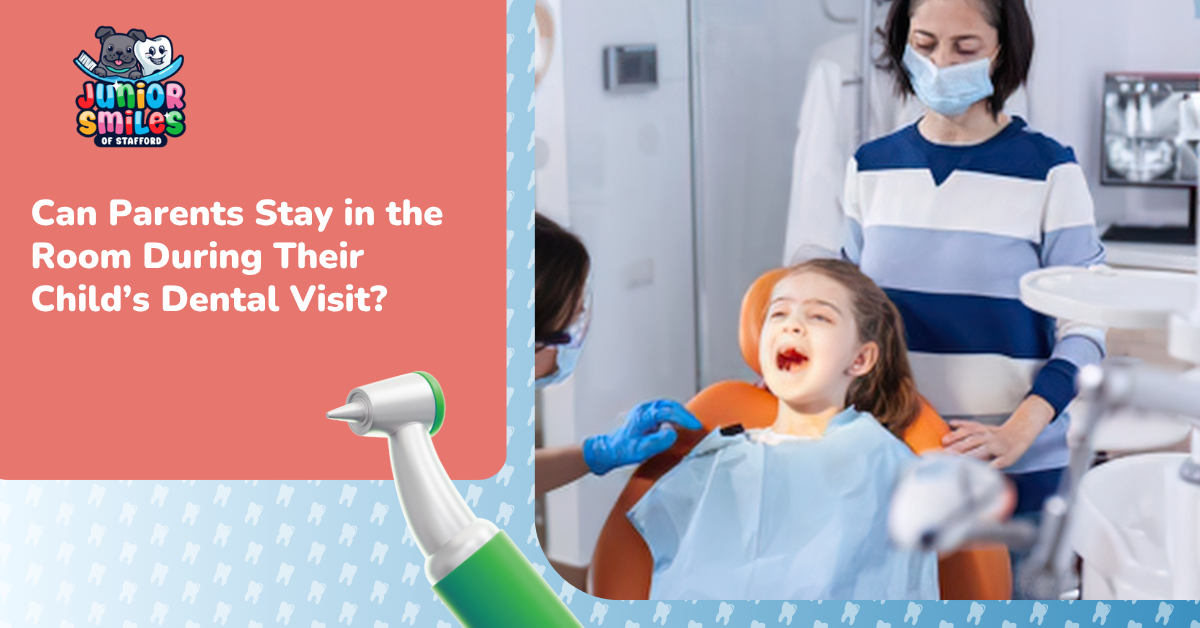
If your child is nervous about seeing the dentist, you may be wondering whether you can stay beside the chair. Your involvement matters. The best arrangement depends on your child, the treatment planned, and the requirements of the appointment, so ask about parent presence before the visit rather than assuming the same arrangement applies to every procedure.
At Junior Smiles of Stafford, our approach starts with getting to know your child and talking with the adults who care for them. We want to understand what helps your child feel comfortable, what makes them anxious, and how they prefer to communicate. That conversation is useful whether you are beside the chair or supporting your child before and after treatment.

Why do children react differently to the dental chair?
A bright light, a reclining chair, unfamiliar sounds, or the feeling of someone looking inside the mouth can be a lot to take in. A child who is comfortable during an examination may still feel unsure about a filling. Another child may worry most about being separated from a parent.
We begin by learning what your child is responding to. At our office, a friendly conversation and choosing something to watch on the chairside television can help make an unfamiliar setting more approachable. These small choices let children participate without asking them to manage every decision about their care.
Tell us if your child does better with a warning before touch, needs extra time to answer, or uses a particular word or gesture to show distress. Useful information does not have to be a diagnosis. “Please explain before you tilt the chair” gives us something practical to work with.
What does pediatric dental guidance say about parents?
The American Academy of Pediatric Dentistry’s behavior guidance emphasizes individualized planning and communication with families. A child’s health, previous experiences, emotional development, treatment needs, and parents’ preferences all help shape the plan.
Parent presence is one part of that conversation. It should not become a test of whether a child is brave or whether a parent is being helpful. Ask what arrangement is proposed, why it may help, and what alternatives are available if your child becomes overwhelmed.
Consent for treatment and decisions about who sits near the chair are related but different issues. You should understand the procedure and have an opportunity to ask questions regardless of the room arrangement.
How can I help if I am beside the chair?
Start with a calm, familiar voice. A short statement such as “I’m here, and you can tell us if you need help” is often more useful than repeated questions about whether your child is afraid. Let your child respond to the dental team when they can, and help clarify when they cannot.
Try to leave space for one explanation at a time. If a dentist, assistant, and parent all give instructions together, a child may struggle to know whom to follow. You can still advocate for your child: tell us when something seems uncomfortable or when you recognize a sign of distress.
- Share words or routines that help your child settle.
- Let the team explain equipment in language suited to your child.
- Ask how your child can signal a need for a pause.
- Recognize specific efforts, such as opening their mouth for an examination.
- Avoid promising that a procedure cannot hurt or that it will be over immediately.
Honest reassurance is more useful than a promise you cannot control. “They will explain what happens next” prepares a child to listen and ask for help.

What if my child wants me to stay?
Tell us before the appointment if separation is a concern. Explain what happens when your child feels anxious and what has helped in other healthcare settings. A previous difficult experience is especially useful to discuss privately, so your child does not have to hear the details repeated while sitting in the chair.
Ask whether the visit can begin with a conversation and an explanation of the room arrangement. If the proposed approach does not feel workable, raise that concern before treatment starts. There may be different ways to prepare, communicate, or schedule care, depending on how urgent the dental problem is.
We do not want a child to interpret needing support as a failure. Some children become comfortable gradually. Others need additional help because of sensory sensitivities, developmental differences, or a previous painful experience.
Does sedation change whether a parent can stay?
It can. A routine examination, nitrous oxide appointment, and procedure involving deeper sedation do not necessarily use the same room setup. The clinical team needs access to the child, monitoring equipment, and supplies appropriate to the procedure.
Before a sedation appointment, ask when you can be with your child, who will care for them during treatment, and when you will rejoin them. Avoid assuming that rules from a sibling’s appointment apply to this one.
Our guide to pediatric sedation options and safety explains related questions. Sedation requires its own assessment and consent process; a question about staying in the room does not automatically mean your child needs medication.
What should I ask before the appointment?
When you call, describe both the dental concern and the support your child needs. “My child has tooth pain and becomes upset when I leave” gives us more useful information than simply saying they are nervous.
Ask whether you can stay for the planned procedure, where you would sit, how the team handles requests for a pause, and how updates will be shared. If another caregiver brings your child, ask what consent or medical information they should have with them.
You can also ask what happens if the planned approach is not working. Knowing there is a process for reassessing comfort and cooperation can help you prepare without promising your child a particular outcome.
Frequently asked questions
Is staying with my child always the best option?
Not for every child or procedure. Discuss your child’s needs, your preferences, and the appointment requirements with the dental team before treatment.
Should I tell my child they will be alone?
Confirm the actual arrangement first. Use simple, accurate language about who will be present and how your child can ask for help.
Can I ask questions even if I am outside the treatment area?
Yes. Ask for an explanation of the proposed treatment, its alternatives, and how updates will be communicated before the procedure begins.
Plan the visit together
If parent presence is important to your family, contact Junior Smiles of Stafford before your appointment. Tell us what your child needs so we can discuss the visit with you and help you prepare.