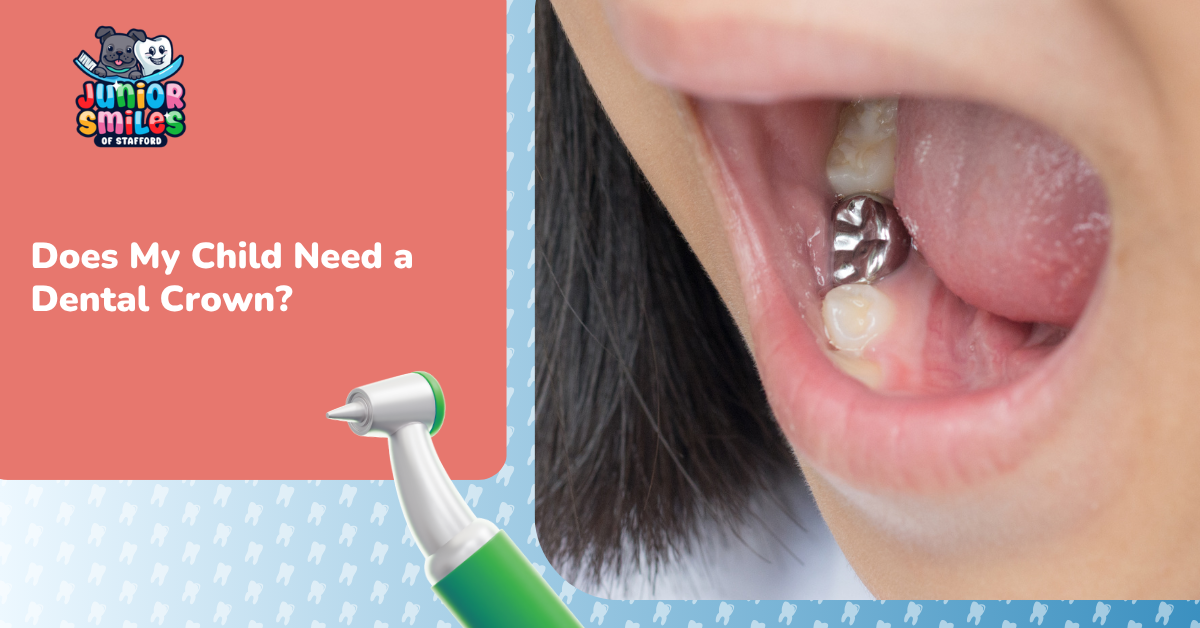
You are sitting in the parking lot of a dental office in Stafford, looking at a multi-page treatment plan. On that paper, your four-year-old who hasn’t complained of a single toothache is scheduled for six fillings, two crowns, and something called a “pulpotomy.”
The numbers at the bottom of the page are staggering, but it’s the pit in your stomach that hurts more. You find yourself wondering, “Is this all truly necessary, or is my child being overtreated?”
If you feel a persistent unease about a recommended dental plan, you aren’t being “difficult” or “paranoid.” You are being a protective parent. At Junior Smiles of Stafford, we believe that the best clinical outcomes happen when parents are informed partners, not just payers. This guide is designed to help you decode that treatment plan, identify red flags, and understand when a second opinion isn’t just an option it’s a right.

Is Pediatric Dental Overtreatment Real?
The short answer is yes, but the context matters. While the vast majority of pediatric dentists are dedicated to the health and safety of their patients, the rise of corporate dental chains has introduced a “production-based” model into the profession. Investigative reporting, such as the Center for Public Integrity’s look into corporate dental quotas, has documented cases where financial incentives led to aggressive treatment plans.
Reddit threads in parenting communities like r/Mommit and r/Parenting are often filled with stories of parents who were told their child had “eight cavities,” only for a second provider to find two. However, it is important to distinguish between “bad actors” and a “conservative vs. proactive” clinical philosophy.
The American Academy of Pediatric Dentistry (AAPD) formally recognizes the parent’s role in the decision-making process. Their “Policy on Informed Consent” explicitly states that parents must be informed of the risks, benefits, and alternatives to any proposed treatment. This includes the alternative of “no treatment” or “active surveillance.” If a dentist becomes defensive when you ask for a second opinion, they are at odds with the professional standard established by the AAPD.
But Baby Teeth Do Need Real Care
While we must be vigilant against overtreatment, we must be equally careful of “under-treatment.” There is a common myth that “it’s just a baby tooth; it’s going to fall out anyway.” As pediatric specialists, we understand that baby teeth have much higher stakes than many parents assume.
Primary molars are designed to stay in your child’s mouth until they are 10 or 12 years old. They hold space for permanent teeth, affect speech development, and allow for proper chewing. If a tooth is lost prematurely due to decay, the neighboring teeth can drift, leading to severe orthodontic complications.
The “Why Now” Trigger: Decay in a baby tooth does not stay contained. Primary enamel is much thinner than adult enamel. A small cavity can progress to the nerve in a matter of months. Once an infection reaches the nerve, it can cause an abscess and potentially damage the succedaneous (permanent) tooth bud forming directly beneath it. In these cases, procedures like Baby Root Canals (Pulpotomies) are necessary to save the tooth and protect the child’s future smile.
Read more: Developmental Milestones: A Parent’s Guide to your Child’s Dental Journey
Red Flags vs. Green Flags in a Pediatric Treatment Plan
When you are evaluating a large treatment plan, use this framework to determine if the recommendations are centered on your child’s health or the office’s production goals.
Red Flags (Proceed with Caution)
- Parent Exclusion: You are told you are not allowed in the treatment room during the exam or procedure. While “behavior guidance” is sometimes easier when children focus only on the dentist, a blanket policy of excluding parents is a modern red flag.
- No X-ray Explanation: The dentist tells you there are cavities but does not show you the digital images.
- Extreme Urgency Pressure: For non-emergency work (teeth that aren’t hurting), you are pressured to book everything immediately “before it gets worse” without a discussion on staging.
- The All-or-Nothing Quote: You are given one large price for the entire mouth with no option to treat the most urgent areas first.
- Hostility Toward Questions: The dentist is unable or unwilling to answer, “What happens if we watch this for three months?”
Green Flags (A Trustworthy Approach)
- Shared Imaging: The dentist sits with you and reviews the low-radiation digital X-rays, pointing out exactly where the “shadows” or decay are located.
- Staged Treatment: The plan is prioritized by clinical urgency. For example, treating an active infection in the upper right quadrant this month, while monitoring a small spot in the lower left.
- Terminology Clarity: The dentist distinguishes between “Incipient Decay” (early stages that might be reversible) and “Gross Decay” (active cavities that require immediate repair).
- Preventive Alternatives: The dentist mentions options like Silver Diamine Fluoride (SDF), a non-invasive liquid that can stop the progression of a cavity without drilling.
- Openness to Monitoring: For borderline cases, the dentist offers to “watch and wait,” scheduling a follow-up in 3 to 6 months to check for progression.
Questions to Ask Before You Approve Any Dental Work
Empowerment comes from having the right vocabulary. Before you sign a ledger, bring these questions to your appointment:
- “Can I see the bitewing X-rays for each tooth on this list?” (Bitewings are the standard for seeing between the teeth where most pediatric cavities start).
- “Which of these are active cavities (into the dentin) versus incipient lesions (white spots) that we could monitor?”
- “Is there demineralization present?” (Demineralization is the early stage of a cavity; it can often be “re-mineralized” with professional fluoride treatments and better hygiene rather than a filling).
- “What is your recommendation for staging this treatment rather than completing it all at once?”
- “Is my child a candidate for SDF (Silver Diamine Fluoride) to buy us some time?”
- “If we wait six months on this specific tooth, what is the risk of it needing a pulpotomy versus a simple filling?”
Read more: What to Do When Cavities Show Up Early in Front Teeth
When a Second Opinion Is Worth Getting (and How to Get One)
If the plan involves sedation, multiple crowns, or more than four fillings in a child who has no history of dental pain, a second opinion is a wise investment.
The Practical Mechanics
Requesting your child’s records shouldn’t be awkward. Under Virginia Code § 32.1-127.1:03, you have the legal right to your child’s health records, including digital X-rays. Simply call the office and say: “I would like a digital copy of my child’s most recent bitewing X-rays emailed to me for my personal records.”
Practices are allowed to charge a reasonable fee for the transfer, but they must provide them in a timely manner. Most reputable offices in the Stafford area will transfer these for free or a nominal fee if you are moving or seeking a consultation.
Finding a Specialist
When seeking that second look, ensure you are seeing a Board-Certified Pediatric Dentist. The distinction matters. A general dentist is a “GP” for teeth; a pediatric specialist has completed two to three additional years of residency specifically focused on the developing dentition and behavior management. This extra training makes them the clinical standard for determining if a plan is appropriate for a young child’s specific developmental stage.
Most major Virginia insurance providers, such as Delta Dental and UnitedHealthcare, will cover a “Limited Clinical Evaluation” or a consultation exam even if you’ve already had a cleaning recently at another office.
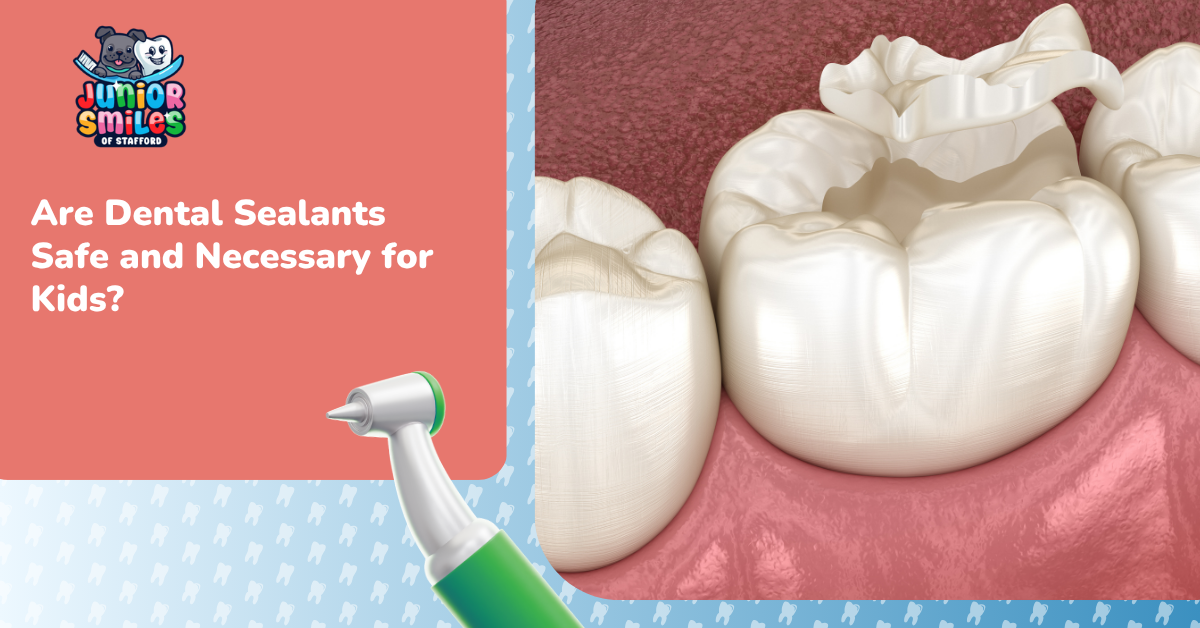
Read more: Sealant vs. Dental Fillings: A Guide to Choosing the Best Treatment for Your Cavities

What a Trustworthy Pediatric Dental Practice Looks Like
A practice committed to appropriate care will always feel like a community resource, not a sales floor. They prioritize “Solution Education.” You should expect:
- A “tell-show-do” approach where the dentist explains tools to the child.
- Transparency regarding costs and itemized ledgers.
- A focus on long-term oral health rather than immediate surgical intervention.
- Specialized experience in Special Needs Dentistry, where behavioral and clinical complexities are managed with extra patience and advanced training.
Ultimately, you are the final authority on your child’s healthcare. If a treatment plan “feels off,” it probably is. Trust your instincts, ask for the X-rays, and never feel pressured into a procedure you don’t fully understand.
Ready to focus on prevention rather than just repair?
Learn more about our custom decay prevention strategies and how we help Northern Virginia families avoid the “filling cycle” through proactive care.