If you have spent any time in Northern Virginia parenting groups or at a school drop-off in Stafford, you have likely heard a wide range of opinions on fluoride. As a health-conscious parent, you apply the same scrutiny to dental recommendations that you apply to food labels and vaccine schedules. You aren’t anti-science; you simply want to evaluate a recommendation based on its merits rather than deferring to authority alone.
If you are feeling hesitant about the “fluoride talk” during your child’s checkup, you aren’t alone. Research from the University of Washington indicates that approximately 13% of parents refuse fluoride treatments during pediatric visits. This hesitancy often stems from a desire to protect children from perceived chemical overloads or unnecessary procedures.
At Junior Smiles of Stafford, our goal is to move from uncertainty to informed confidence. This article doesn’t exist to override your judgment, but to provide a clinical framework for evaluating it. Decisions made between the ages of 6 and 12 when permanent molars erupt and enamel is at its least mature compound forward for a lifetime.

What Fluoride Varnish Actually Does (Mechanism, Not Mandate)
To understand safety, we must first understand the mechanism. Many parents associate fluoride with the “systemic” version found in drinking water or supplements. However, in-office fluoride varnish is a different tool entirely.
The “Mineral Tug-of-War”
Every day, your child’s teeth are in a constant state of flux. Bacteria produce acids that strip phosphate and calcium from the enamel (demineralization). Saliva attempts to put those minerals back. Fluoride varnish tips the scales in your child’s favor by accelerating the reabsorption of these minerals.
When we “paint” varnish onto the teeth, it creates a chemical reaction where calcium fluoride-like globules form on the enamel surface. These globules act as a reservoir, hardening the enamel over several hours.
Topical vs. Systemic Safety
A major point of confusion is the “chemical load.” A standard application of 5% Sodium Fluoride (NaF) varnish uses a tiny amount (roughly 0.25mL to 0.5mL). Because the varnish hardens within seconds of contact with saliva, the risk of ingestion is negligible. This is a primary reason the AAP recommends varnish as the preferred form for children under six it stays on the teeth rather than being swallowed.
The American Academy of Family Physicians (AAFP) found that this targeted application can reduce the risk of cavities by up to 63% in high-risk populations. For many parents, understanding fluoride safety and its role in remineralization is the first step in moving past the “mandate” and into the science.
The Six Barriers to Acceptance: A Diagnostic Framework
Researchers like Chi et al. (University of Washington) have identified that fluoride hesitancy generally falls into six distinct psychological categories. Identifying which category resonates with you can help you find the specific data you need.
- Perceived Unnecessity (“If it ain’t broke”): Parents often see no visible cavities and assume prevention isn’t needed. However, “silent decay” often forms between teeth (interproximal) and is invisible to the naked eye.
- Chemical Aversion: The desire to keep “chemicals” out of a child’s body. We often suggest parents look for resin-free or hypoallergenic varnishes that avoid common allergens like pine rosin or gluten.
- Fear of Harm (Fluorosis): Concern about white spots on teeth. It is important to note that dental fluorosis occurs during the critical period of tooth formation (birth to age 8) and is almost exclusively linked to systemic supplements or swallowing large amounts of toothpaste, not controlled topical varnish.
- General Uncertainty: Feeling overwhelmed by conflicting information online.
- Feeling Pressured: Feeling that the dentist is “selling” a service rather than explaining a need.
- Personal Choice: The belief that this should be a purely parental decision, independent of clinical guidelines.
Read more: A Parent’s guide to Early Detection of Cavities
Fluoride Treatment vs. The Alternatives: The Honest Tradeoff
As a parent, your job is to weigh the stakes. There is no universally “correct” answer, only the best answer for your child’s specific risk profile.
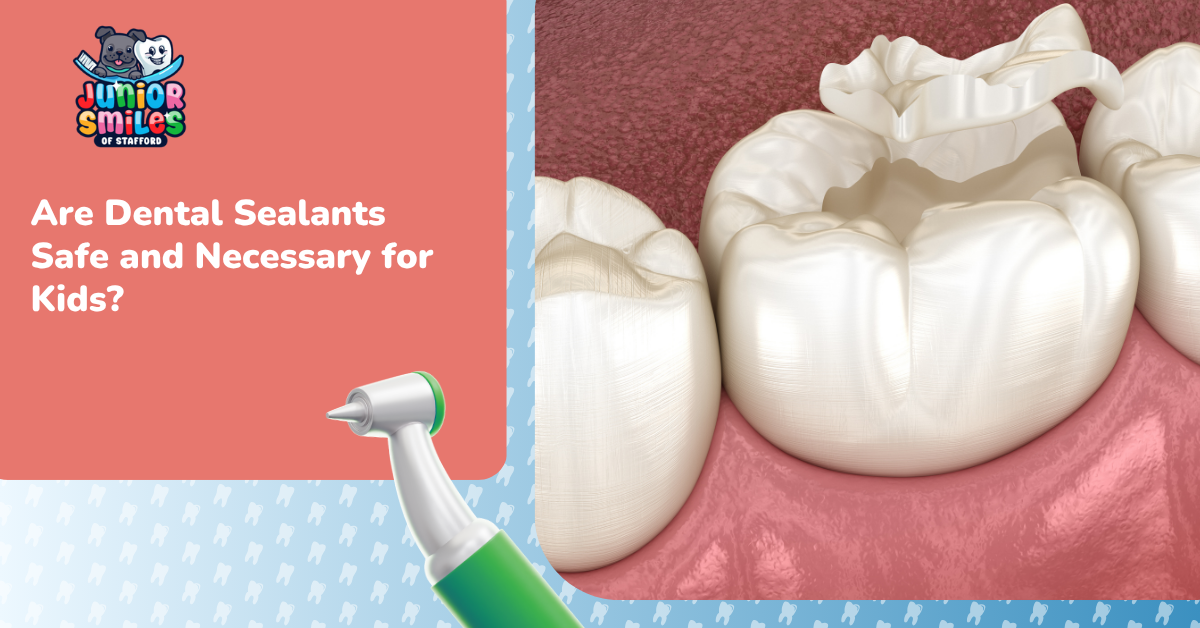
If your child is currently at peak cavity risk (ages 6–12), how fluoride varnish protects erupting permanent molars becomes a critical part of the conversation. If you choose to decline varnish, your pediatric specialist may suggest non-invasive Silver Diamine Fluoride (SDF) treatments to arrest existing soft spots or protective dental sealants to provide a physical, non-chemical barrier.
Read more: The Fluoride Treatment for Kids
Local Context: Stafford and Northern Virginia Water
Many parents ask about the existing “fluoride load” in our region. Currently, Stafford County Utilities and Fairfax Water maintain fluoridation levels in line with CDC recommendations (roughly 0.7 ppm). For parents concerned about cumulative exposure, in-office varnish is often the safer choice because it is topical and controlled, unlike systemic intake which is harder to measure.
Our practice believes in our transparent approach to fluoride hesitancy; we prefer to discuss these levels with you based on your child’s specific diet and water source.
Questions to Ask Your Child’s Pediatric Dentist
An empowered parent is our favorite partner. Before accepting or declining treatment, we encourage you to ask:
- What is my child’s current cavity risk level, and what data (X-rays, history) informs that?
- What specific brand/ingredients are in the varnish you use?
- How do you monitor for fluorosis over time?
- Based on my child’s age, what are the most appropriate non-chemical alternatives?
- How will we adjust these recommendations as my child’s enamel matures?
A board-certified pediatric dentist should answer these questions with transparency regarding treatment costs and insurance coverage and without a hint of defensiveness.

Hesitancy is rational. It is a sign that you are deeply invested in your child’s long-term health. The evidence shows that fluoride varnish is a highly effective, low-risk tool for preventing childhood decay, but the right pediatric partner will treat your questions as part of the relationship rather than an obstacle to overcome.
If you would like to discuss these questions with a board-certified pediatric specialist in a pressure-free environment, we invite you to reach out.